
Thursday, November 17, 2011
some students like online, some don't.. response to response to Bunge article
Thank you, Steve. I read Bunge's article in the Chronicle. I just figure that some students like online learning and others don't. It depends on what they're used to and how closely they need to relate to flesh-and-blood person.
All the best, Linda
Linda B. Nilson, Ph.D., Director
Office of Teaching Effectiveness and Innovation
Clemson University, 445 Brackett Hall
Clemson, SC 29634
Tel.: 864-656-4542
nilson@clemson.edu * www.clemson.edu/OTEI
RESPONDING TO EMAIL
Linda Nilson - Here's a test email excerpt one recent post from my blog TLT-SWG, I hope you find it interesting, useful and, perhaps, provocative. - Steve Gilbert
--------------------------------------------------------------------------------------------
"Online" can mean many different things in different contexts.
Bunge’s article omits too much. It seems to explain how she tried to add an online component to a course, why that failed, and why she will “no longer teach online.” But her interpretations of students’ responses, her conclusions, and her implied recommendations are not supported by her article. Her experience was too narrow. She did not adequately answer the questions below. Clear answers to these questions would also provide useful context for a description of an experimental introduction of some online activities to improve any undergraduate course that has previously had none.
For other excerpts from Bunge’s article and my responses, see tlt.gs/bungeresponse.
Also, see below for full citation/link for her article.
I share Bunge's hope that our colleagues will "keep evaluating technology's impact, perhaps they will eventually find a way to invest its processes with the sense of shared humanity that binds together students and teachers in successful classes." And I hope she shares mine that our colleagues will continue just as avidly to try to achieve those successful classes - with or without online activities...By using whatever available technologies, supporting resources, pedagogies, etc. that seem worthwhile and well-matched to their own abilities, to the characteristics of their students, and to the purposes of those classes.
QUESTIONS
1. How did online assignments differ from other assignments in the course?
How were course assignments communicated?
How was students' [text-only?] work examined, guided, structured and graded?
Were students permitted, encouraged, or required to do their thinking and writing in any ways for the "online" assignments different from how they did their thinking and writing for other assignments?
Were students permitted, encouraged, or required to read the passages for the online assignments in any ways that differed from other reading assignments?
What was the nature of the online assignments, activities? The most common option would be to use the institution's Web-based course management system to enable and require students to participate in an asynchronous threaded text-only online discussion during which the instructor intervenes occasionally. That certainly wouldn't be my recommendation for achieving Bunge’s stated goals.
2. What was the course schedule and how did it change? Did the course usually include 3 face-to-face class meetings per week?
a. Was the schedule changed to include only two such weekly meetings with some kind of online activities provided instead of the third weekly meeting? or
b. Was some kind of online work added instead of substituted for class meetings?
3. What was the purpose of the online activities? In what ways, if any, were their purposes different from other course activities?
Above comments, questions, refer to: "Why I No Longer Teach Online," by Nancy Bunge, "...professor of writing, rhetoric, and American culture at Michigan State University." The Chronicle of Higher Education, November 6, 2011
Part of:Online Learning: The Chronicle's 2011 Special Report
BROWSE THE FULL ISSUE: News, Commentary, and Data
IMAGE
Photo of "Laundry hanging on clotheslines between buildings, New York City" ca. 1900
http://upload.wikimedia.org/wikipedia/commons/thumb/9/9c/A_Monday_washing%2C_New_York_City%2C_1900.jpg/500px-A_Monday_washing%2C_New_York_City%2C_1900.jpg
http://upload.wikimedia.org/wikipedia/commons/9/9c/A_Monday_washing%2C_New_York_City%2C_1900.jpg
This work is in the public domain in the United States because it was published (or registered with the U.S. Copyright Office) before January 1, 1923.
By Detroit Publishing Co. [Public domain], via Wikimedia Commons
Photochrom print by the Detroit Photographic Co., copyrighted 1900.
From the Photochrom Prints Collection at the Library of Congress
THIS IMAGE is available from the United States Library of Congress's Prints and Photographs division under the digital ID cph.3g04167.


Friday, November 11, 2011
ADVICE TO JEN Experienced/successful prof to teach 1st online course: Ask for help; PlanB; Be clearer; Use feedback
 |
| Online? |
- You are not alone! Ask who can help you. Ask what resources are available to you. Ask what you can defer until you teach your 2nd or 3rd online course.
- Prepare for technological disaster. Always have a Plan B, C, ...
- Plan even more and provide even clearer, more explicit explanations and instructions.
- Find Low-Threshold Applications and free resources.
- Collect just enough use-able student feedback.
- Consider “course choreography”: sequence, pace, and opportunities for interaction as you plan “presentations,” activities, and assignments.
- Think about the “little stuff” that can be essential for creating and sustaining a positive supportive environment for your online students.
Above is a summary of responses to this question that I asked Beth Dailey, Jane Harris, Ilene Frank, during our weekly ad hoc “Keeping Up” conversation this morning:
"What advice do you have for someone in Jennifer McCrickerd’s situation? She is our guest presenter today on FridayLive! She is already a highly successful teacher, highly respected colleague, a good sport about technological disruptions, and willing to describe her efforts to prepare to teach to teach her first fully online course this summer. NOTE: My 3 colleagues have taught many online courses quite successfully and helped many colleagues to do so as well.
Here's a slightly organized version of the chat transcript from which those 7 items were extracted
Thursday, November 10, 2011
"My goal is to cover everything" says Salman Khan, the ultimate panupholsteraphile! He’s no anupholsteraphobe!
 |
| Panupholsteraphilic or Anupholsteraphobic? |
Now there is hope. A new way to cover it all! From Salman Khan, the ultimate panupholsteraphile! the messiah of autodidactic polymaths! the self-proclaimed antithesis of anupholsteraphobes!
When asked on his own Website:
"What topics do you plan to cover?"
He succinctly replies:
"My goal is to cover everything."
- from Frequently Asked Questions, KhanAcademy Website 20111109
Since KhanAcademy is so successful, and Khan's energy so great, we can be relieved that he is striving only to cover the world, and not to rule it!
[Learn a little more about the KhanAcademy below.]
Finally, as if you hadn't yet noticed:
Finally, as if you hadn't yet noticed:
Higher education in the United States today is like the old Wild West!
In the latter half of the 19th century the "boomers" and "boom towns" kept pushing the frontier ever westward and inventing new ways of working and living.
Now, "boomers" are just trying to keep up, and most of us are failing at that.
Most of us can't even see where the frontier is and what direction it's moving. We don't know whether we want to be on it, behind it, or ahead of it!
Most of us can't even see where the frontier is and what direction it's moving. We don't know whether we want to be on it, behind it, or ahead of it!
So, the next time someone tells me about a new gizmo or a new way of teaching or publishing or communicating or delivering the content, or covering the course material.... I'm just going to yell " Ti yi yippee yippee yay!" ...
Actually, what I'll really do is use some new device to "YELL" into this blog's successors like this:
"TI YI YIPPEE YIPPEE YAY!"
More... about KhanAcademy:
More... about KhanAcademy:
Students can learn effectively from working on "real-world" problems. But “Ender’s Game” is NOT a good example!
 |
| "Whatever your gravity is ...the enemy's gate is down" |
I would NOT cite Ender's Game as an implied exemplar! For a better, different kind of example, learn about Jennifer McCrickerd's approach to teaching online for the first time. See below and join a free online FridayLive! session 11/11/11 at 2PM ET.
I've actually read and enjoyed Ender's Game - the short story and novel as well as several of the sequels. Andrew Watt's description of "Design Thinking" in the blog posting mentioned above is quite appealing, and I share his belief that problem-based teaching/learning can be highly motivating and effective. But not in Ender's Game. The author, Orson Scott Card, describes a future form of education in which children certainly do "work on real-world problems." However, Card takes this approach far beyond where most of us hope to go, and immerses the reader in compelling descriptions of the profoundly troubling consequences.
But you can judge for yourself! The story and the first 2 novels in the series won almost every award given in the science fiction genre.
Full Disclosure: We're planning an online discussion of educational/technological implications of Ender's Game, so I hope you read and enjoy one of the following and join our online conversation in 2012:
- Summary of "Ender's Game" SPOILER ALERT: IF YOU ARE LIKELY TO READ THE STORY OR NOVEL SOON, DON'T READ THE SUMMARY FIRST BECAUSE DOING SO MIGHT REDUCE THE IMPACT OF THE ENDING.
- Full text of original short story "Ender's Game" (free, online at Card's Website)
- Novel Ender's Game (available from Amazon & elsewhere)


Wednesday, November 09, 2011
"Wading into Online Teaching” FREE 2pm ET 11/11. Good reminder 90 people “waded into” TLT Roundtable 11/11/94 in DC!
Join FridayLive! 11/11 2pm ET Free Online "Wading into On-Line Teaching"

"Trying to convert a successful face-to-face class into a successful on-line class by paying attention to the research and embracing mistakes" with Jennifer McCrickerd, Drake U. More info, resources - homebase Web page for FrLv 11/11
A discussion of the fear and trembling frequently associated with starting something new and ways to think about new ventures that can decrease the anxiety and increase enthusiasm. Using the decision to teach an on-line class in an upcoming term as an example of moving out of one’s comfort zone, the presenter will discuss how she is using her knowledge of learning theory and experience teaching face-to-face classes to think about teaching on-line and how she is using her understanding of students’ vulnerability in the classroom to address her own insecurities about moving out of the classroom. Participants can expect some ideas about how to deal with related issues in their own teaching and also to share their own experiences and insights to help others.
How could colleges and universities be more hospitable to failure? Especially under current conditions of increasing workload and tenure/promotion pressures? Especially when many faculty members are feeling pressed to make a transition from mostly face-to-face courses toward mostly online courses?
See also TLT-SWG posting ""Why I No Longer Teach Online" Bunge article, Chronicle Hi Ed; Candid, Potentially Misleading, Potentially Helpful"
Twitter Glossary - Demystifies those peculiar terms like Hashtag, DM, handle, retweet,...
 |
| Images as confusing as Twitter handles? |
Here's what I just learned from the Twitter Glossary about:
1. Handle/screen name/username vs. "name"
You can chose and change your Twitter "name" within your Twitter profile rather easily and often. That will not have much, if any, effect on your official Twitter address or identity, which is known as your handle, your screen name, or your username. Those 3 terms refer to the same thing. But your Twitter "name" may be completely different from them.
"A user's 'Twitter handle' is the username they [sic] have selected and the accompanying URL, like so: http://twitter.com/username."
2. Message/Direct Message/DM
"People you follow can send you a direct message [within Twitter]
"In turn, people you follow can send you a direct message.
"You cannot send a direct message to a user who is not following you.
More about DMs
Tuesday, November 08, 2011
"Why I No Longer Teach Online" Bunge article, Chronicle Hi Ed; Candid, Potentially Misleading, Potentially Helpful
 |
| "Online" has Many Meanings |
Prof. Bunge has been candid and generous in describing her attempts to improve an undergraduate course through additional online activities. I hope many will emulate her willingness to explore, evaluate, and share intermediate results with colleagues who might benefit from her experience. I offer below some suggestions for clarifying this article and making it even more useful. I include questions to help others describe online course improvements more fully.
Some of Bunge's conclusions, especially those implied by the title and by the sentence that was extracted as a highlight, are not justified by the full published text of the article.
"I told my classes I could add online work if students requested it, but not a single student of the 147 enrolled in all my classes asked for it." This highlighted sentence is probably misleading. It seems to suggest that students are rejecting online options, and by implication, so should teachers. But without further explanation, it seems more likely that the undergraduates were responding exactly as Bunge should have expected would happen if she told students in ANY class that she could add more work (of any kind) if they requested it.
Perhaps a more accurate, but less provocative title for this article would be "What I Hope to Improve in My Teaching - and How My First Exploration of Online Activities Fell Short."
A more appropriate conclusion than suggested by the article's title is that adding a certain kind of online assignment was unsatisfactory for the students and the teacher in this course. The article suggests (but not explicitly) that it was unsatisfactory because
a. too many students reported that they "struggled to complete the course requirements"
b. too few students reported or demonstrated that they "engage more deeply with texts"
c. too few students reported or demonstrated that they "learned more and were more challenged intellectually"
d. too few students "talked about my enthusiasm, respect for their opinions, and obsession with making sure they understood the texts and assignments"
This a-d list above, extracted from Bunge's article, provides a good start for developing, evaluating, and selecting among various ways of improving undergraduate courses - whether online or otherwise.
Clear answers to the following questions might help others benefit from any candid description of an experimental use of online activities to improve an undergraduate course. In particular, to understand what Bunge had attempted and why, some of the following information would be essential:
1. How did online assignments differ from other assignments in the course?
- How were course
assignments communicated?
- How was students' [text-only?] work examined, guided, structured and graded?
- Were students permitted, encouraged, or required to do their thinking and writing in any ways for the "online" assignments different from how they did their thinking and writing for other assignments?
- Were students permitted, encouraged, or required to read the passages for the online assignments in any ways that differed from other reading assignments?
- What was the nature of the online assignments, activities? The most common option would be to use the institution's Web-based course management system to enable and require students to participate in an asynchronous threaded text-only online discussion during which the instructor intervenes occasionally. That certainly wouldn't be my recommendation for achieving her stated goals.
2. What was the course schedule and how did it change? Did the course usually include 4 face-to-face class meetings per week? and
a. Was the schedule changed to include only three such weekly meetings with some kind of online activities provided instead of the fourth weekly meeting? or
b. Was some kind of online work added instead of substituted for class meetings?
3. What kinds of online activities were included in efforts to "use online work to coax students to think through texts on their own"?
Bunge said "I wondered why students gave me good evaluations the first time I attempted online teaching. Perhaps my blundering won them over. I made many mistakes as I learned to use the technology, so I e-mailed them frequently and anxiously monitored their reactions. They may have appreciated the same thing that students in my traditional classes liked: my concern for their learning." Are we intended to infer that these frequent emails and other interactions so effectively demonstrate that she cared about the students' learning that they produced some of the hoped for motivation? If so, could that frequency of email and attention be achieved without the goad of initial "technological ineptitude"?
Also, in what ways was Bunge's initial goal of getting students to "engage more deeply" characteristic of (or different from) the "approaches that genuinely work" that she learned about during the Wisconsin conference mentioned in her article?
Bunge also said: "The most interesting contrast shows up in the comments: Those who liked my course with the online modules praised its organization, while students in the course with no online component talked about my enthusiasm, respect for their opinions, and obsession with making sure they understood the texts and assignments—all traits beyond a computer's reach." Why does Bunge believe in these limits? No one familiar with computers expects them to engender enthusiasm, demonstrate respect, or obsess about students' understanding. However, like textbooks and other resources, computers can be used effectively by teachers for these admirable purposes.
Finally, I share Bunge's hope that our colleagues will "keep evaluating technology's impact, perhaps they will eventually find a way to invest its processes with the sense of shared humanity that binds together students and teachers in successful classes." And I hope she shares mine that our colleagues will continue just as avidly to try to achieve those successful classes - with or without online activities. By using whatever available technologies, supporting resources, pedagogies, etc. that seem worthwhile and well-matched to their own abilities, to the characteristics of their students, and to the purposes of those classes.
TweepDiff -Allows comparing followers associated with Twitter accounts Tweepdiff.com

- Enter 2 or more Twitter usernames (e.g., our Twitter username or screen name is "tltgroup", usually mentioned or referenced within a Tweet as "@tltgroup"; similarly, Derek Bruff uses @derekbruff as one of his Twitter usernames/screen names)
- Indicate for each username whether you want to compare the associated list of usernames who are FOLLOWING that one or the list of usernames who are being FOLLOWED BY that one
- Press the "Compare" button
- Get a count and a list of usernames common to all you have entered.
- above excerpt from http://tweepdiff.com/about
Why?
"If you think someone else is a good judge of Twitter usefulness, you can diff yourself with them to discover new people to follow."
"By entering your name in both boxes and choosing friends for the first box and followers for the second, you can see who is following you, that you aren't following back, or who you are following that isn't following you back. This may help remind you to follow people, or it may remind you to unfollow someone who is no longer following you."
- above excerpt from http://signalsready.com/products/tweepdiff/
IMAGE
Photo of "Die Zwitscher-Maschine (Twittering Machine); Watercolor and ink; oil transfer on paper with gouache and ink borders on cardboard. Group of birds shackled to a wire attached to a hand crank." Date 1922; Image hosted at <http://www.waggish.org/2010/paul-klee-twittering-machine/> by Paul Klee
http://upload.wikimedia.org/wikipedia/commons/thumb/0/09/Die_Zwitscher-Maschine_%28Twittering_Machine%29.jpg/500px-Die_Zwitscher-Maschine_%28Twittering_Machine%29.jpg
http://upload.wikimedia.org/wikipedia/commons/0/09/Die_Zwitscher-Maschine_%28Twittering_Machine%29.jpg
Permission "This work is in the public domain in those countries with a copyright term of life of the author plus 70 years or fewer.
By Paul Klee [Public domain or Public domain], via Wikimedia Commons
TweepDiff - Find Out Who You're Missing On Twitter
Monday, November 07, 2011
"Assessment" still a dirty word? Is it: A. Decisive B. Confirming/Refuting C. Acclaiming D. Appeasing, E. Wasteful?
 |
| Assessment lightens or adds burden? |
[ ] A. At best (ideally?) DECISIVE: Information that will help decide among viable, appealing options when available judgment, wisdom, and leadership cannot.
[ ] B. At best (politically?) CONFIRMATION/REFUTATION:
Confirm what's obvious to us; refute what's obvious to them.
[ ] C. At best (most powerfully?) ACCLAMATION : Overwhelm the need for other evidence by acclaim.
[ ] D. Too frequently? APPEASEMENT: What's the least we can do to get them off our (my) back?
[ ] E1. Worse UNNECESSARY: Additional evidence will be ignored - no longer needed; e.g., studies of benefits/harm of wordprocessing in 1980s.
[ ] E2. Worst WASTEFUL: Decision will be made before results are available.
[ ] E3. Worsest HYPOCRITICAL: Decision has already been made secretly and study is superfluous
Thursday, November 03, 2011
Tomorrow 11/4 2pm ET FridayLive: update TLTRoundtable for transition to hybrid/online courses tlt.gs/frlv Free Reg
Change IS Possible!
From On-Campus to [More] Online
CCI and FQE
Counter-Counter-Implementation (CCI) Strategies
Steve Gilbert’s Fundamental Questions Extended (FQE)
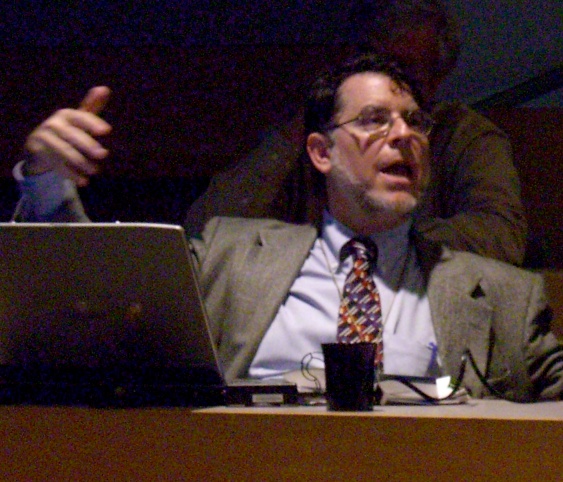 Conversation
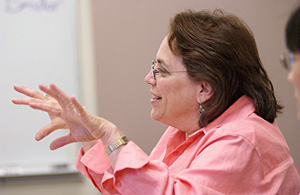
Steve Gilbert, TLT Group with Jane Marcus, Stanford Univ.
Friday, November 4, 2011 2:00 pm (ET)
Friday, November 4, 2011 2:00 pm (ET)
For more info: Home Base (Google Doc) Web Page: tlt.gs/CCIFQE1104
At most colleges and universities today, many people feel pushed toward online education -- faster and with less clarity of purpose than they find comfortable [understatement?].
Steve Gilbert and Jane Marcus discuss how to “innovate” more comfortably and effectively when pressed to move from courses that are mostly campus-based toward courses that have more online elements. They will explain their emerging approach and apply it to a case study.
They will recommend strategies and activities based on their combined experience with several colleges and universities - from inside, and as consultants - and by adapting and extending their previous work:- TLT Roundtables: Guidelines, resources, and lessons learned - new question:
“Who should be at the table? Now? At the next stage of our planning and deliberations?”; Fundamental Questions - newest versions; Frugal Innovations; Small Collaborative Groups - Counter-Counter-Implementation Strategies - work of Peter Keen, et al. tlt.gs/counterimp
- Marcus’ doctoral and related research: "Diffusion of Innovations and Social Learning Theory: Adoption of the Context Text-Processing System at Stanford University” "...adoption is a function of available resources, the perceived value of the innovation, and communication with other adopters. Her [Marcus’] dissertation research provides empirical evidence in support of the model, indicating that social/contextual variables are as important as resources in encouraging adoption of technology" - from “Creating a Campus Culture to Support a Teaching and Learning Revolution,” by Dorothy A. Frayer, CAUSE/EFFECT journal, Volume 22 Number 2 1999.
Innovation and Players
They’ll describe the innovation that is being considered and then identify who the key players are who need to be at the table to be part of the project. They’ll ask participants to explain why they believe the “players” identified as needing to be “brought to the table” are or are not essential, could be omitted, and those who might, in fact be missing.
Public and Private - Values, Goals, Agendas - “Loyal Opposition” vs. Subversive Counter-Implementation
They’ll examine the values that must/can be part of open, “public” discussion, as well as the values and other info that is likely to remain “private” or part of the “sub-text.”
They’ll consider how to elicit and build on the public statements of institutional [and less widely held and/or applicable] values for each of the representatives at the table as well as the private/personal/political goals of the various participants. The interplay between these two perspectives determines who serves as legitimate, loyal opposition or truly subversive "counter-implementers" during subsequent implementation.
Tuesday, November 01, 2011
If you deliver a course, you don't own it. "Deliver" is the opposite of "engage." A course is not a book or pizza.


My skeptic's hackles rise whenever I hear someone talk about "delivering a course" or "delivering a lecture" or "delivering content" ... It's not a quibble.
If we talk about education in terms of "delivery" we have begun to deny responsibility for what happens AFTER the "material" is delivered. Yes, I know that many people can learn much that is worth learning on their own - if they have access to good information resources (including libraries, books, online, ...). But I believe that the historical evidence is overwhelming in the other direction. Most people need something more like engagement with others to learn much that is important - especially things that are important and not immediately applicable.
And, finally, if you develop or teach a course that you can truly "deliver," then someone else can deliver it instead of you. If your course is "deliverable" or worse yet "a deliverable", then you are unnecessary. Watch out!
See also postings from TLT-SWG:
- A Course is not a Pizza
- "Problem of Learning in Postcourse Era" Where have all ...
"Pizza & course materials can be delivered. Courses cannot. Even online. - Easy to agree on TEXTBOOK problems, hard to find ...
- DIY Pizza: Open Education Resources (MIT) Precursor to ...
- A course is not a pizza or book. Who owns a course? If you deliver it, you don't own it! Who takes responsibility?
Monday, October 31, 2011
"Puzzles of the Brain..Artist's Journey through Amnesia" Exhibit of works before, during recovery from encephalitis
I had the privilege of working with this artist, Lonni Sue Johnson, in the 1980s
 and again when she created the TLT Group's logo for us in 1998. She was patient when I was slow to see how her images could elevate my fumbling attempts to translate ideas into words.
She offered insights and humor - and so does her work. She represented multiple, complex ideas with deceptively charming drawings in warm, soft colors.
I was saddened by recent news of Lonni Sue's encephalitis, and intrigued by the exhibit at the Walters Museum in Baltimore (co-sponsored by the Cognitive Science Department of the Zanvyl Krieger School of Arts & Science at The Johns Hopkins University). Finally, this past Saturday, Sally and I took our nephew to the "...show of approximately 25 works exploring the impact of severe brain damage on the life and creativity of an artist." - from "Puzzles of the Brain: An Artist's Journey through Amnesia"
The exhibit displays Lonni Sue Johnson's works chronologically along with explanations of her brain damage. I couldn't simply enjoy the first sequence of pictures that showed her growing success as an artist and commercial illustrator (several New Yorker covers, etc.), because I knew that trajectory had been broken. Then came the hand-made word puzzles and other non-paintings, with explanations of how and why she couldn't paint or draw or remember or talk or move.
Finally, the third set of images offers some hope. Lonni Sue's partial but extraordinary recovery continues today. The love and dedication and skill of Lonni Sue's mother and sister and the medical professionals are clear and admirable. She has regained some of her ability to use words and to produce art. She is still communicating ideas and feelings. She can recognize her old work and her new work as her own. And so can we. Her spirit is still there.
The following 4 paragraphs are excerpts from "Johns Hopkins Researchers Study Artistic Aspect of Illustrator’s Illness," News release from Johns Hopkins Univ., September 12, 2011, MEDIA CONTACT: Lisa De Nike
Thursday, October 27, 2011
Use Template tlt.gs/SGCtmplt for Small Group Collaboration Cases -based on Guidelines/Resources tlt.gs/SGCguide
We need cases and examples to clarify, illustrate, and extend our preliminary conclusions about working with small, collaborative, mixed-role groups of colleagues. Working with a small group this fall, we developed draft guidelines/resources and a template to help others describe their own small group work in a way that will be easier to share and build on.
To participate, contact Rebecca Kurtz.

We believe that working with small groups and focusing on small, realistic steps will lead to more widespread, long-lasting meaningful changes. In fact, in these especially challenging times, small steps may be the ONLY way to keep moving forward - and in the right direction.
- Steven W. Gilbert, President, TLT Group, Summer, 2011
Wednesday, October 26, 2011
“Hey, wait a minute!” Ilene Frank answers my question: Who’s responsible for support services for online learners?
"..Online courses are COURSES"
 Ilene Frank <ifrank@tltgroup.org> wrote in response to TLT-SWG posting "A
course is not a pizza or book. Who owns a course..." :
See "Academic Advisors and Student Support" video from Walden Univ.

See "Academic Advisors and Student Support" video from Walden Univ.
"Hey, wait a minute! This makes it sound like no one's caught on to the idea of student support services for online learners! Not the case! I do not believe that online courses are "sink or swim" in any institution with a commitment to online learning. Example of some services from Walden U
http://www.waldenu.edu/Support-Services.htm.
Can't resist sharing "Bullwinkle Show..Quotes” Found when searching for “Curses, foiled again!” BEWARE OF PUNS

Excerpts [warning! puns ahead]:
Bullwinkle: [explaining the components of a stereo system] This is the amplifier, which amplifies the sound. And this is the preamplifier, which, of course, amplifies the pree.
Rocky: Look, Bulliwinkle, a message in a bottle.
Bullwinkle: Fan mail from a flounder?
Rocky: This is what I really call a message.
Bullwinkle: I'd like to apply for a job as an usher?
Boris: What experience have you had?
Bullwinkle: I've been in the dark for most of my life.
WARNING: THIS ONE NOT FOR FAINT OF HEART
[Rocky and Bullwinkle have brought an old model ship to an antique dealer]
Rocky: Bullwinkle, this ship is covered in rubies and look what's written on the side! O-Mar Khay-yam. Bullwinkle, do you know what this is?
Bullwinkle: Well, if you're waiting on me to say it, I won't.
Antique Dealer: Me neither.
Rocky: OK, then this must be
[pause]
Rocky: "The Ruby Yacht of Omar Khayyam".
Bullwinkle, Antique Dealer: OOOOH!
And, penultimately, the one that led me to this webpage:
Boris Badenov: Phooey! Foiled again!
Natasha Fatale: Don't you mean, "Curses! Foiled again!"?
Boris Badenov: Please, Natasha. This is kiddie show.
Finally, found when searching for image to use (citation below):
Rocky: Look, Bullwinkle! All the wonderful people out there can see us again!
Bullwinkle: But how?
Rocky: Flickr!
Bullwinkle: Flick her? But I don't even know her!
Steve Bell - Librarian/UpKeeperExtraordinary - Interviews (text, live) LOTS OF RECOMMENDATIONS, RESOURCES

See Steven Bell's blogs: Kept-Up Academic Librarian, ACRLog, and Designing Better Libraries, and his column “From the Bell Tower” in Library Journal’s Academic Newswire.
Excerpts from a recent text interview:
Questioned about Twitter, etc., " These sources are great in some ways but the amount of noise within these channels can be problematic. You need to limit yourself to following a handful of people within these communities."
[HOW DO YOU SELECT YOUR HANDFUL?]
Questioned about resources:
"Think for a moment about the new Piazza service which allows students to talk together about the best way to complete a homework assignment. How could an academic library be part of such a service? Would the library want to be part of such a service?
" I recommend beginning with RSS feeds and email alerts from web sources and then experimenting with web page change detection services.
"Also, it is important to point out that libraries often overlook their own database services as a source of RSS feeds and email alerts. As an example, I do saved searches and alerts for 'design thinking' and I get table of contents updates from many business and library publications. Alerts and RSS feeds from ProQuest and other information services consolidate updates from many sources and this can result in significant time savings.
"I recommend that librarians subscribe to updates from Inside Higher Education and The Chronicle of Higher Education ... ACRL Environmental Scan and the Top Ten Trends reports... ACRL Insider newsletter ... New York Times Education, Business and Technology sections. ... University Business, Library Journal Academic Newswire, MIT InfoTech Updates (some content is fee-only), and Harvard Business Review Blogs.
- Above excerpts from "Interview with Steven Bell — Keeping Up With the Things That Matter for Academic Libraries" Posted by: mhdiaz | October 26, 2011
Part II avail Oct 27
Tuesday, October 25, 2011
A course is not a pizza or book. Who owns a course? If you deliver it, you don't own it! Who takes responsibility?
See: "Are You Ready For Online Learning?" WHAT KIND? Synchronous/Asynch? Text/Voice/Video?
What could enable more students to succeed in an online course?
Especially, what kinds of support provided by someone other than the lead teacher?
What kinds of support for the students?
What kinds of support for the lead teacher?
Too many students fail or drop out of online courses. The single reason cited most often for students’ failure or non-completion of online courses is “lack of self-discipline,” for which many online education advocates are too quick to blame the students.
But there are many varieties of self-discipline, just as there are many varieties of learning and many varieties of good teaching. And many answers to this increasingly complex and important question:
Who shares responsibility for students' failure or success?
Too often, self-administered or other readiness assessments are used primarily to direct students away from online courses. This is certainly more humane than accepting high failure and dropout rates for those students who lack certain traits, skills, or knowledge - especially time-management and computer-related skills. But there is a potentially more constructive alternative than either redirection or the old “sink or swim” approach to campus-based college-level courses.
Most institutions of higher education have abandoned “sink or swim”. Many institutions are committed to helping students develop more effective learning skills, and to helping faculty teach in ways more likely to engage students actively in their courses and succeed academically. These colleges and universities make guidance and other forms of academic support readily available to undergraduates who find some required or highly attractive courses too difficult or puzzling. And those resources are often provided by staff, peers, or other academic professionals who are not directly affiliated with these challenging courses.
Can’t similar services be provided for online students? Provided by someone other than the lead teacher of the course?
We believe the answer is “yes”. But there are some big challenges... See future postings here in TLT-SWG.
Some self-tests for prospective online students:
What could enable more students to succeed in an online course?
Especially, what kinds of support provided by someone other than the lead teacher?
What kinds of support for the students?
What kinds of support for the lead teacher?
There are many self-tests for prospective online students - a few are listed below.
 |
| Self-Discipline!? |
Too many students fail or drop out of online courses. The single reason cited most often for students’ failure or non-completion of online courses is “lack of self-discipline,” for which many online education advocates are too quick to blame the students.
But there are many varieties of self-discipline, just as there are many varieties of learning and many varieties of good teaching. And many answers to this increasingly complex and important question:
Who shares responsibility for students' failure or success?
Too often, self-administered or other readiness assessments are used primarily to direct students away from online courses. This is certainly more humane than accepting high failure and dropout rates for those students who lack certain traits, skills, or knowledge - especially time-management and computer-related skills. But there is a potentially more constructive alternative than either redirection or the old “sink or swim” approach to campus-based college-level courses.
Most institutions of higher education have abandoned “sink or swim”. Many institutions are committed to helping students develop more effective learning skills, and to helping faculty teach in ways more likely to engage students actively in their courses and succeed academically. These colleges and universities make guidance and other forms of academic support readily available to undergraduates who find some required or highly attractive courses too difficult or puzzling. And those resources are often provided by staff, peers, or other academic professionals who are not directly affiliated with these challenging courses.
Can’t similar services be provided for online students? Provided by someone other than the lead teacher of the course?
We believe the answer is “yes”. But there are some big challenges... See future postings here in TLT-SWG.
Some self-tests for prospective online students:
Steve Gilbert's “Fundamental Questions” Activity. Context: Transition from mostly on-campus to more online courses
See also: Intro/Reprise: Steve Gilbert's Fundamental Questions 2 min. video
Slides available via Slideshare Here is "transcript" of slides + instructions for running this activity:

- Change IS Possible Steve Gilbert’s Fundamental Questions October 14, 2011 2:00 pm (ET) The TLT Group
- These Slides [extended set] tlt.gs/CounterImpslidesSWG
Fundamental Questions http://tlt.gs/FQforFI
Some rights reserved. See http://tlt.gs/shareforward - Purpose of "Fundamental Questions" Identify key points of agreement and disagreement that will guide and limit progress on our project/innovation/movement/ implementation/improvement...
- Today's Context for Fundamental Questions:Transition from courses based mostly on face-to-face class meetings toward courses that include online activities - in whole or in part.
- Fundamental Questions Transform AND Preserve - Think silently for 1-5 minutes.
Reflect silently on the “Fundamental Questions” that follow. [good idea to make notes which will NOT be collected]
These questions should always be at the heart of our work.
Think about the kinds of change likely to happen to your students, your colleagues, your institution, and yourself... Especially with your support - active or tacit. - Fundamental Question 1: What do you most want to gain?
- Fundamental Question 2: What do you most cherish and want not to lose?
Friday, October 21, 2011
RESCHEDULE "Wading into Online Teaching" J. McCrickerd WAS 10/21 WILL BE 11/11/11 2pm ET tlt.gs/teachonlinefrlv1111
We got bumped today 10/21/2011 by tech problems that we could neither predict nor control. Sorry. Fortunately, Jennifer McCrickerd is resilient and a good sport and undaunted! She has agreed to reschedule her well-prepared, thoughtful session for FridayLive! 11/11 2pm ET Free Online "Wading into On-Line Teaching
Trying to convert a successful face-to-face class into a successful on-line class by paying attention to the research and embracing mistakes" with Jennifer McCrickerd, Drake U. More info, resources - homebase Web page for FrLv 11/11
- Quote in title of this posting and additional excerpts below are from "How we succeed by failing," Kathleen Parker, Washington Post, October 14, 2011, writing in response to eulogies of Steve Jobs and his recognition of the importance of his own failures in "a now-famous 2005 commencement speech at Stanford." [video version 15 mins; text transcript].
How could colleges and universities be more hospitable to failure? Especially under current conditions of increasing workload and tenure/promotion pressures? Especially when many faculty members are feeling pressed to make a transition from mostly face-to-face courses toward mostly online courses?
How could colleges and universities be more hospitable to failure? Especially under current conditions of increasing workload and tenure/promotion pressures? Especially when many faculty members are feeling pressed to make a transition from mostly face-to-face courses toward mostly online courses?
Subscribe to:
Posts (Atom)