Tuesday, February 14, 2012

"World's smallest microphone barely visible...” Lecture capture cannot be prevented! Can it be guided, used well?

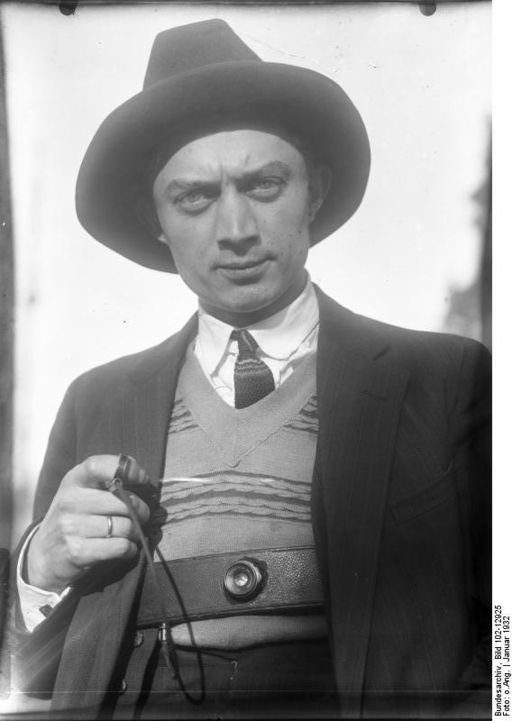
Even in 1932 - that's a spy belt camera!
"With a little imagination, there is no end to the opportunities for invisible microphones, including 'smart' buildings, defense systems, and a bevy of spy gadgets like pens and watches."  
- excerpt from article:  "World's smallest microphone barely visible to naked eye" By Chris Jablonski | January 5, 2012, 10:32am PST, ZDNet


When you are teaching or giving a presentation or almost anywhere doing almost anything, keep in mind that old TV refrain "Smile, you're on candid camera" because you might be.  So the question is not really about policy permitting/encouraging/requiring "lecture capture" of classroom activities.  The question is "In what ways can we take advantage of the new ease with which anything can be recorded and published?"


Monday, February 13, 2012

My latest favorite excuse for APPARENTLY ignoring your msgs: "I've got HDADHD" - to paraphrase Steven Wright


From comedy album, "I Still Have a Pony," by Steven Wright:    
“My nephew has HDADD: Hi-Definition Attention Deficit Disorder. He can barely pay attention, but when he does it’s unbelievably clear.”     


Friday, February 10, 2012

text for display Ender's Test 20120210

Description & Invitation Ender's Test of Artificial Instruction
Ender's Test of Artificial Instruction: Is Your Course a Pizza? Who needs teachers?
In the context of growing pressure on faculty and other academic professionals
to adapt, recreate, etc. courses that have been entirely or mostly based on face-to-face interaction
and "traditional" teaching/learning resources into
"courses" that include more online activities or elements or resources.
The short story and book "Ender's Game" immerses us in a painful mix of the real and artificial in future education. "Ender's Test" will guide/measure development of artificial courses - as the Turing Test does for artificial intelligence. Help us identify essential course elements, how they're changing, and shape Ender's Test. [Apologies to Orson Scott Card, Alan Turing & their admirers.]
Invitations - 500 characters and Longer Version
Initial question and challenge
Question: What activities or features would convince a student who is taking a course that there is a human teacher in a meaningful role, even though the student cannot see/touch/smell the teacher? I.e., what are the characteristics of a "teacherless" course essential to convince the students who take it that they have a teacher? Who cares? Why does/doesn't this matter? For whom?
Challenge: Develop a new test, which I'm tentatively calling "Ender's Test" - a bit of a spoof/allusion to both Ender's Game and Turing Test.
The idea is to develop a test for determining whether an undergraduate course is being "taught" by a human or not.... Like the Turing Test for determining whether a device that is communicating with someone is a human or is an "artificial intelligence."
OBSERVATION AND REFOCUS
Observation: Happily, several discussions in which we attempted to develop a list of the activities, features, and a related test as described above, seemed unavoidably to accomplish this closely-related and unstated goal as well:
Identify activities/features/patterns/capabilities of a human teacher that are likely to engage students more actively and effectively in a course, and that are likely to be perceived as demonstrating why it is important for a human teacher to have a significant role in the course.
Refocus: Let's continue this exploration with a slightly different focus:
What kinds of courses can be improved by increasing the role of technology and simultaneously decreasing the role of teachers?
For which kinds of learners, teachers, purposes, institutions?.....
How could or should we develop methods (rubric?) for identifying courses that can benefit more/less from
increasing the role of technology and media AND SIMULTANEOUSLY
decreasing the role of human teachers and other academic professionals?
Let's begin with an even narrower focus within the above:
"The Caring Test for Artificial Instruction"
["The Lilly Test for Artificial Instruction"]
In what kinds of courses does caring NOT matter much?
In what kinds of courses does caring matter a lot?
In what kinds of courses does caring matter a lot AND those courses can be improved by increasing the role of technology and simultaneously decreasing the role of teachers?
For which kinds of learners, teachers, purposes, institutions?.....
In what kinds of courses does caring matter little enough so that those courses can comfortably be improved by increasing the role of technology and simultaneously decreasing the role of teachers?
[Above, "what kinds of courses" is intended to imply also "for which kinds of learners, teachers, purposes, institutions?....."]
The WGU Test for Artificial Instruction
[With apologies to those who support the more recently responsible and effective work of the Western Governors University - as opposed to the claims that preceded and accompanied its launch]
Categories for Re-Clothing the Emperor(s) (or governors)
Instead of focusing on how technology can be used undetectably in courses to replace teachers, let's explore how we might sort courses in which increasing usage of technology to some extent replaces the role of teachers and other academic professionals (and family members? et al.?) into categories like these:
A. Not good enough for any children
B. Good enough for other people's children
C. Good enough for my children
D. Good enough for, and deserved, by all children

Steven W. Gilbert, President
http://tlt.gs/SteveGilbertBIO
301/270-8312
skype: stevegilbert
Schedule appts with me: http://tungle.me/SteveGilbert
THE TLT GROUP -- a Non-Profit Organization
The Teaching, Learning, and Technology Group
www.tltgroup.org
PO Box 5643, Takoma Park, Maryland 20913 USA

Thursday, February 09, 2012

“difference between a live online.. & self-paced course”: Former “instructor-led with scheduled start & end dates”


If you believe that you already understand the options and expectations for online teaching and learning available in 2012, you simply don't know enough.

Racing car careening so fast it appears about to crash

"If everything seems under control, you're not going fast enough" - attributed to Mario Andretti by "Quotation #39999 from Michael Moncur's (Cynical) Quotations" on Website "The Quotations Page" at http://www.quotationspage.com/quote/39999.html as of Feb 9, 2012
"If you can remain calm and keep your head about you when everyone else is losing theirs, then around you probably don't understand the situation." [Found 1 version of this quote as of Feb 9, 2012 at http://successnet.org/articles/angier-remaincalm.htm but what's the correct wording and the original source of this quote - probably from the 60s - SWG]
Here is a reasonable but unavoidably incomplete and misleading simplification from the New York Times - note that "Epsilen Online Learning Environment" is somewhat similar to Blackiboard and other "modern(?)" Learning Management Systems


"This guide will help you understand and navigate our online courses and eLearning environment.

  • Live Online Courses: “Interactive Course – Facilitated”
  • Self-Paced Courses
  • What is the difference between a self-paced and instructor-led course?
  • Webcasts: “Interactive Webcast-Live”
  • What software do I need to learn online?
  • Technical Requirements
  • Epsilen Online Learning Environment"


Online Learning « New York Times Knowledge Network

Online Learning « New York Times Knowledge Network

Attribution: 1 December 2011 by Ocirne94 http://commons.wikimedia.org/wiki/File:Speed_Dreams_car_rolling.jpg

Wednesday, February 08, 2012

“intellectual sin of the century: passing judgment on the fate of others in the name of their future as you see it”

Sin of too many centuries
From Francis Fukuyama's review of One Man’s History:  Tony Judt Reviews His Life’s Journey, New York Times  February 3, 2012  
Following is the 4th paragraph quoted in full with yellow highlighting added for emphasis:
Whatever Judt’s initial ideological commitments, he later concerned himself with a stark and important question: “how so many smart people could have told themselves such stories with all the terrible consequences that ensued.” The story was that of Communism, which perpetrated “the intellectual sin of the century: passing judgment on the fate of others in the name of their future as you see it, . . . concerning which you claim exclusive and perfect information.” Looking back at the history of left-wing figures from the 1930s like the French socialist Léon Blum, he saw their central failing as the lack of “any appreciation of the possibility of evil as a constraining, much less a dominating, element in public affairs.” This was to become the theme of his 1992 book “Past Imperfect,” which chronicled French intellectuals like Jean-Paul Sartre who publicly supported Stalinism while remaining willfully blind to its horrors. 

“Fingerprint Clearance Card" required for students taking in-person practicum required WITHIN online program

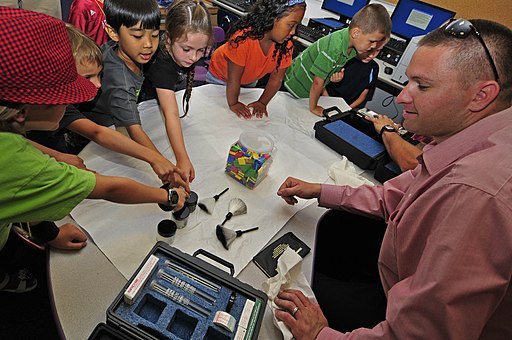
Navy Investigator...shows children how to dust for fingerprints
"If learners intend to work in the education field (public or charter) and are required to obtain a Fingerprint Clearance Card or if they will complete student teaching or provide tutoring, they will need to obtain an 'Identity Verified Print' (IVP) Fingerprint Clearance Card, not the regular fingerprint clearance card."  
...

"Q: For what purpose are fingerprints used?
A: Fingerprints will be used to obtain both a state and federal criminal records check.
...
"Q: Where can I find out what would preclude me from obtaining a clearance card?
A: Precluding offenses for a level one fingerprint clearance card can be found in A.R.S. 41-1758.07, subsection B and C, link below. Precluding offenses for the regular fingerprint clearance card can be found in A.R.S. 41-1758.03, links as follows. A.R.S. 41-1758.03 A.R.S. 41-1758.07"
- Above excerpts copied from
"Fingerprint Clearance FAQs | College of Education | Grand Canyon University
Under College of Education/Program Essentials/Online Learning: "GCU offers a variety bachelor's and master's degree programs in education, as well as continuing education courses for teachers."

Tuesday, February 07, 2012

Reassurance or Reality? Hard choice when tech & economy change fast;also see “Necessity...mother of self-deception”

It is hardest to abandon the hidden hope of wishful thinking when it is too late to deny the accumulating signs of change but too early to understand and accept their implications.
That is when we most hope for impossible reassurance:  for an explanation of how we can continue to succeed, as we have for so long, without changing what we do.
Flotilla of rubber duckies...Accumulating sign?
Also see tlt.gs/necselfdecept


Example: A "Reassuring" Consultation in the 1980s
In the early 1980s, a small group of textbook publishers invited me to bring a couple of lawyers who understood trends in technology, publishing, and intellectual property law for a discussion in New York City. We met our hosts for lunch in a nice restaurant. A casual and pleasant conversation began while we were eating, and continued as dessert and coffee were served - well beyond the usual duration of introductory pleasantries required by business courtesy.


I was confused when it was almost time to leave and we were still being asked superficial questions with no obvious focus.  Our hosts seemed satisfied to request and receive no more than our most superficial observations about recent devleopments in information technology and the possible implications for intellectual property. We were not asked to speculate about the possible impact of recent changes on the textbook publishing industry. [Note: this meeting occurred  shortly before the Internet had enabled a highly active used-textbook market in higher education.]


We solved the puzzle during our train-ride home. Our hosts could not ask their most urgent questions. Perhaps they could not acknowledge even to themselves what they wanted from us most.  Reassurance.

Friday, February 03, 2012

Got data? for interview today Feb 3 “Changing Course: Reinventing Colleges, Avoiding Closure” tlt.gs/ABrownChngCrs

BOOK DISCUSSION tlt.gs/ABrownChngCrs
Alice Brown, Past Pres. Appalachian College Assoc, will be interviewed by  Steve Gilbert.

Need additional background data for recent years (e.g., 2005-2010) …

Colleges opening/closing - undergrad "seats" 
  • Are more colleges closing or opening?
  • Total # of colleges and universities in the United States went from XXXX to YYYY 
  • Total # of colleges and universities in the US that closed, merged, or changed name (“reinvented itself”)?
  • Total # of colleges, univs in the US that were launched?
  •  Are there more private colleges for-profit and online? And fewer non-profit on-campus?
  • Are there more/fewer applications for undergraduate enrollment? More/fewer applications per available opening?
Student/Faculty Ratio
  • What is happening to the student faculty ratio? Overall? By institutional category? Online vs. on-campus?
  • What is happening to the student full-time tenure track faculty ratio? student full-time non-tenure track faculty ratio? student part-time faculty ratio? Overall? By institutional category? Online vs. on-campus?
Financial Patterns How are financial patterns changing vis a vis
  • Payment per course per student collected from the student or from someone on behalf of the student
  • Operating cost per course
  • Faculty salary per course
 

Wednesday, February 01, 2012

Alice Brown answers TLTGroup’s Fundamental Questions re college, university, div or dept threatened with closing

In preparation for free online discussion of her new book  Changing Course: Reinventing Colleges, Avoiding Closure, on Friday, Feb 3, 2012 at 2pm ET, Alice Brown  recorded her answers to the TLT Group's 2 Fundamental Questions:
1.  What do you most want to gain? 
2.  What do you most cherish and want not to lose?
You can hear/see Alice Brown's recording and other people's recorded answers to these questions at tlt.gs/FQanswers - or if we are lucky about Internet conditions and your browser's ability to manage flash files, you can click on the audio player gadget that should appear right here in this blog posting and hear Alice's voice!


Please join us for the 2PM ET BOOK DISCUSSION tlt.gs/ABrownChngCrs re Changing Course: Reinventing Colleges, Avoiding Closure, Alice W. Brown  Jossey-Bass 2011 
Register Free: tlt.gs/frlv
Alice Brown, Past Pres. Appalachian College Assoc, will be interviewed by  Steve Gilbert.

More about how you can record YOUR answers to our Fundamental Questions and about Alice Brown's answers:  

Can "BlackBerry..Avoid Hall of Fallen Giants"? Comeback, decline, or oblivion? Like college on brink of closing?

Blackberry 850 - First one?
Recent NYTimes article reminds us that once-dominant now-fading Blackberry killed the pager market.  Article describes 3 "ways forward" for RIM, maker of Blackberry. 
Join us online free this Friday Feb 3 and discuss how these strategies (hopes? fears?) might apply, if at all, to colleges on the brink of closing:
1. "Triumphant comeback" - major changes but continue original mission
2. "Gradual decline and diminution" - serve much smaller still-loyal constituency
Road to Oblivion
3. "Oblivion" - concede to competitors that can more quickly and efficiently meet old constituency's needs better - in new ways  

INVITATION Please join us this Friday Feb 3 2pm ET for a BOOK DISCUSSION 
More info:  tlt.gs/ABrownChngCrs
Changing Course: Reinventing Colleges, Avoiding Closure, Alice W. Brown Jossey-Bass 2011 Register Free: tlt.gs/frlv
Brown, Past Pres. Appalachian College Assoc, will be interviewed by Steve Gilbert.

Excerpts quoted in the title of this post, above, and below are all from 

"The BlackBerry, Trying to Avoid the Hall of Fallen Giants," by Sam Grobart & Ian Austen, 
January 28, 2012, New York Times 

Tuesday, January 31, 2012

What pushes a college to the brink of closing? Warning signs? Too late? Can you help? Online Feb3 free tlt.gs/frlv

BOOK DISCUSSION tlt.gs/ABrownChngCrs
Brown, Past Pres. Appalachian College Assoc, will be interviewed by  Steve Gilbert.

“No thriving college is immune from unforeseen disaster, just as no struggling college is irreversibly destined for closure.” Sadly, if you are part of a college or university community -- student, alumni, board member, faculty, president, any other academic professional -- you can no longer be fully confident of the stability of your institution or of your role within it.


In this live online session, we’ll discuss the dangers, the warning signs, and how to deal with them.  Alice Brown will summarize and extend the ideas in her new book Changing Course in which she “... presents stories of colleges in crisis and considers what makes the difference between a college that closes and one that nearly closes but manages to remain open.”   First Brown, then other participants, will be invited to share their observations and insights in response to these questions:
  • What pushes a college to the brink of closing? What are the warning signs?
  • How can a college avoid the brink? Come back from the brink?  When is it too late?
  • What are the differences between colleges that “reinvent themselves” or barely avoid closing, and those that disappear? Who cares? Who should care?
  • When a college is nearing the brink, what info is especially difficult to hear, accept, and act on? For whom? From whom? Who needs to be "shielded from" what kinds of info?
  • How can anyone help? Are there any positive opportunities that can be grasped in these crises?


Wednesday, January 25, 2012

"Good enough for other people's children - but not yours?" Innovation, degradation, or rupture? tlt.gs/tltswg

I offer this question as an antidote to fierce claims for defective innovations - innovations less likely to improve than to degrade services and rupture the  social fabric that is already stretched too thin.


I'm tired of listening to the distracting conclusions of Romantic Techno-Zealots (technology as individualizing, self-actualizing), Romantic Neo-Luddites (technology only undermines deep learning, human connections), and  Hyperrational PseudoEgalitarians (everyone should accept what can be provided by the technology  and practices that fit within the boundaries of current methods of observation and measurement)... and self-serving politicians.

You've probably heard the advice about imagining your adversary naked or in underwear when you feel intimidated.  I have similar advice when you encounter someone enthusiastic, articulate, deeply convinced, ... AND  ignorant, inexperienced, and deviously ill-intended.  
Imagine this person stripped naked of superficial statements and shallow understandings, and temporarily unable to deflect your questions.  Imagine asking "Do you believe that what you're proposing is good enough for other people's children....  but not your own?"  
Now that I'm anticipating the arrival of my first grandchild, I've begun thinking:
"Would you want what you're advocating for your own children and grandchildren?"  
"When you claim that your new alternative is more efficient, entirely adequate, and that 'the research' does not support the practices you oppose, and you say that your alternative is good enough, don't you really mean that it is good enough for other people's children and grandchildren, but not your own?"  


Can you imagine people advocating healthcare reform that would provide treatment for cancer patients that is "good enough for other people's children" - but not good enough for their own?  Can you imagine anyone admitting that - even to themselves?


My question about "being good enough for other people's children" may be cynical, but it can reveal and deflate the rising bubble of hypocrisy.  You may find some disturbing similarities between this idea of "other people's children" and the role of "Other People's Money" as described in speeches by Danny Devito and Gregory Peck in the 1991 movie of the same name.

Ender's Test: Is Your Course a Pizza? Who needs teachers? Invitations Jan27 & Feb10 tlt.gs/EndersGameTest TLTGroup

Ender's Test of Artificial Instruction  
Which is real? artificial?  See Magritte!
[with a respectful good-humored apology to admirers of Alan Turing who developed the Turing test of artificial intelligence as "... a test of a machine's ability to exhibit intelligent behaviour" in 1950 - from Wikipedia 20120124]
I. INVITATION JAN 27, 2012
Even if you haven’t read “Ender’s Game” the short story or novel, and you would like to be prepared for the Feb 10 session about Ender's Test, please join us for a discussion Ender's Game:  January 27, 2012 2PM ET Free Online Fridaylive! 


II.  INVITATION FEB 10, 2012
You are invited to a presentation/discussion simultaneously onsite and online Friday, Feb 10, 3:15PM ET  

III. MORE INFO - WORKING DRAFT

Tuesday, January 24, 2012

Sustaining New Year's exercise resolutions in spite of 5 (out of 9) common problems

It's not really ALWAYS uphill!
Recommendations
1.  "I'm too far from my goal, so why start?"  "... break up your goal into smaller units,... Little victories, like dropping a pound a week or running an extra minute without stopping, will fuel your momentum."
3.  "I'm bored with my same old routine."...mix activities.
4.  "I don't have the energy." ..."Exercising at even a very easy pace will give you more energy than if you sit it out...."
5.   "No matter how hard I try, something always foils my workout schedule."  ..."People who have a process goal, such as a target number of weekly workouts, stick to their routines with significantly more success than those who focus on a big-picture outcome -- such as losing 20 pounds -- or go along without any specific goal,... they also feel less stressed about squeezing in exercise."
6.  "I just don't have the time." ... try replacing some longer sessions (30-60 minutes each) with several 10-15 minute sessions instead.
- Above quotations are excerpted from "Improve Your Sweatitude: 9 Motivation Rut Busters," by By Liz Neporent in Fitness Magazine Website as of 20120124http://www.fitnessmagazine.com/workout/you-can-do-it/workout-motivation-tips/

Also see TLT-SWG post:  "Already backsliding on New Year's Resolutions? There's hope for our limited willpower! Strategies, Tools,.."

And  see "Beginning a Fitness Walking Program," from the Walking Site


Friday, January 20, 2012

Appreciation of R. W. Grossman (1943-2012) of Kalamazoo College & his article "Encouraging critical thinking using ..”

Link to PDF version of "Encouraging critical thinking using the case study method and cooperative learning techniques," Grossman, R. W., Journal on Excellence in College Teaching, 5(l), 7-20, 1994.

On January 19, 2012, Craig Nelson of Indiana University wrote an "Appreciation" of Robert W. Grossman  of Kalamazoo College who died January 7, 2012. Here are the first few sentences:
"All of us remember with deep affection Bob’s ebullient good humor, his deep intelligence, and his expansive caring for his family, for those who worked with him, and, especially, for people who had drawn less favorable hands in life. 
"I benefited from a king’s portion of Bob’s graces and talents. We first worked together intensively during one of his sabbatical years when he drove to Bloomington regularly (1993-94). This strange choice was motivated by our interactions at Lilly Conferences earlier. He ultimately wrote an important paper on “Hidden Transformations” in teaching based on ideas that began to germinate then. He also graced me with his cooperation on many presentations in national venues. These included a meeting of the Perry Network (1993), NSF sponsored Chautauqua short courses on “Increasing the Retention of Under-Represented Groups—And the Learning of All Groups” (2003-2006), and presentations on similar topics at several of the Lilly Conferences on College Teaching."

Thursday, January 19, 2012

Educ Video Games w Real/Virtual Missiles? DISTURBING VIDEO youtu.be/10N8096MTGg Ender's Test Artificial Instruction

WARNING - DISTURBING CONTENT: When you watch this 90 second YouTube video, ask yourself if you are seeing something entirely fictional or an edited videorecording of a 'real' event. Are you sure?  
Please consider the questions about "artificial instruction," the timeline about real/virtual war at a distance offered below, and read Ender's Game free online  or get the book in preparation for joining us Jan 27 and Feb 10.


USAF Photo 2008
YouTube video excerpt from "Whiskey Tango Foxtrot" episode of TV series "The Good Wife" Season 3 Episode 9 November 2011  "Alicia and Will ...are defending Sgt. Regina Elkins who is charged with disobeying orders and launching a missile attack in Afghanistan that resulted in the deaths of 12 people." -from "Storyline" Written by garykmcd  on IMDb website www.imdb.com/title/tt2103915/ 

QUESTIONS about "Artificial Instruction" please consider:
  • What are the characteristics of a “teacherless” course essential to convince the students who take it that they have a teacher? Why do/don't you care? 
  • When young people are trained to make video-game-like decisions that result in real explosions, what are the educational implications? Why do/don't you care?
INVITATION
Please join us for 2 free online discussions about Ender's Game and Ender's Test
1. Ender's Game (short story and book) in the next free online FridayLive! session January 27, 2012 2pm ET  - read story free online  or 
order book from Amazon
2. Ender's Test (procedure for distinguishing between "real" and artificial courses) on February 10, 2012 at 3:15pm ET

Keep checking tlt.gs/EndersGameTest as we continue to prepare this webpage for these 2 online events.  You can also get more info and register for the sessions at tlt.gs/frlv.

TIMELINE

Also, consider this highly abbreviated and selective timeline of observations and stories about real/virtual war at a distance:
  • 1945 "The next war may be fought by airplanes with no men in them at all . . " - Gen Hap Arnold, USAAF – US Army Air Forces, 1945 - quoted in many sources without citation, e.g.,  http://publicintelligence.net/usaf-drones-in-irregular-warfare/ 
  • 1964 Dr. Strangelove movie "...if the U.S.S.R. is hit by nuclear weapons, it will trigger a 'Doomsday Machine' which will destroy all plant and animal life on Earth."  from plot summary Written by Colin Tinto <cst@imdb.com> for "Dr. Strangelove or: How I Learned to Stop Worrying and Love the Bomb" on IMDb website  http://www.imdb.com/title/tt0057012/plotsummary
  • 1977 Ender's Game Short Story by Orson Scott Card   Plot summary on author's website first published in Analog Science Fiction and Fact, August 1977 
  • 1983 War Games movie.  Plot summary:  "A young computer whizz kid accidentally connects into a top secret super-computer which has complete control over the U.S. nuclear arsenal. It challenges him to a game between America and Russia, and he innocently starts the countdown to World War 3. Can he convince the computer he wanted to play a game and not the real thing ?"  Written by Colin Tinto <cst@imdb.com>  Full plot summary written by Gene Chin (Huggo) for IMDb website  http://www.imdb.com/title/tt0086567/
  • 1985 Ender's Game Novel, Orson Scott Card,  Plot summary on author's website    order book A Tor Book - Published by Tom Doherty Associates, Inc. 
  • 2011 "Whiskey Tango Foxtrot" TV series episode in "The Good Wife"
  • 2011 "Air Force Drone Operators Report High Levels of Stress,... the operators’ jobs: watching hours of close-up video of people killed in drone strikes. After a strike, operators assess the damage, and unlike fighter pilots who fly thousands of feet above their targets, drone operators can see in vivid detail what they have destroyed [many thousands of miles away on another continent]. " - "Air Force Drone Operators Report High Levels of Stress," by Elisabeth Bumiller, December 18, 2011 New York Times http://www.nytimes.com/2011/12/19/world/asia/air-force-drone-operators-show-high-levels-of-stress.html

AWARDS FOR ENDER'S GAME
YALSA Outstanding Books for the College Bound.
Yalsa Popular Paperbacks for Young Adults.
Hugo Best Novel winner, 1986.
Nebula award, novel, 1985.
 ----------------------------------------------------------------------
Image selected by Steve Gilbert 20120119
Photo of "An MQ-1 Predator unmanned aircraft, armed with AGM-114 Hellfire missiles, flies a combat mission over southern Afghanistan. The MQ-1 is deployed in Operation Enduring Freedom providing interdiction and armed reconnaissance against critical, perishable targets." U.S. Air Force photo by Lt Col Leslie Pratt 29 November 2008
http://upload.wikimedia.org/wikipedia/commons/thumb/0/01/MQ-1_Lethal_Presence_.jpg/512px-MQ-Lethal_Presence_.jpg
http://upload.wikimedia.org/wikipedia/commons/0/01/MQ-1_Lethal_Presence_.jpg
http://www.af.mil/shared/media/photodb/photos/081130-F-9876J-809.jpg
Permission "This image or file is a work of a U.S. Air Force Airman or employee, taken or made during the course of the person's official duties. As a work of the U.S. federal government, the image or file is in the public domain."


Music used in Good Wife episode: 'Sail' by AwolNation 

Why/how conference on teaching supports better student learning? Lilly Conf Dirs tlt.gs/LillyDirs2012 1/20 OnlineFree

Lilly Conference Directors’ Roundtable “What good is a teaching/learning conference?
How is the van ride home different from the van ride to the conference?” 
Friday Jan. 20, 2:00pm EDT... Free to all Register tlt.gs/frlv
Lilly Conference Directors Milt Cox, Ray Purdom, Laurie Richlin, and Todd Zakrajsek
Moderator Steve Gilbert  For more info, tlt.gs/LillyDirs2012

Those of you who have been lucky enough to have attended a Lilly Conference will appreciate the rare occasion this webcast will be - it took some planetary alignment to get these 4 directors all together at the same time. So come and celebrate Lilly! And join us for a fabulous discussion on teaching and learning in higher education! By the end, we're confident that you'll know why a conference on teaching provides knowledge, skills, and attitudes that create better student learning.

The 5 annual Lilly Conferences on College & University Teaching have long earned their reputation for providing excellent resources for understanding and improving teaching and learning in higher education. For over thirty years, teacher-scholars from across the U.S. and internationally have gathered to share insights and recommendations in these events. Each conference provides a balance of scholarly research, practical guidance, and collegial support. The Conference Directors shape each Conference to provide a context of long-term goals, long-standing truths, and new research in which presenters and participants discuss the most pressing teaching/learning questions and challenges of the day. Most featured speakers and other session presenters participate in these conferences from start to finish - extending their relations with colleagues they know well and building new connections.Join Steve Gilbert in a discussion with the current Lilly Directors about their perspectives on teaching and learning in higher education as shaped by their interactions with conference presenters and participants. We’ll explore the Directors’ views on how participants can make the most of these conferences - the value of attendance by teams, achieving effective mixtures of research and scholarship, and community building.
More about the session and Registration for Jan. 20

IMAGE selected by Steve Gilbert 20120119
Photo of "Decorated minivan, Islamabaf" 13 April 2005, "Author Guilhem Vellut from Paris" 
http://upload.wikimedia.org/wikipedia/commons/thumb/a/aa/Decorated_minivan.jpg/512px-Decorated_minivan.jpg
http://upload.wikimedia.org/wikipedia/commons/a/aa/Decorated_minivan.jpg
http://commons.wikimedia.org/wiki/File:Decorated_minivan.jpg
Permission "This file is licensed under the Creative Commons Attribution-Share Alike 2.0 Generic license www.creativecommons.org/licenses/by-sa/2.0

Wednesday, January 18, 2012

Happy New Year 2012! My New Year's Resolutions (2 Personal 2 Professional) -Steve Gilbert, TLT Group Jan 18

[Also see TLT-SWG Posting "Already backsliding on New Year’s Resolutions? There’s hope for our limited willpower! Strategies, Tools,.."]
Walk, laugh, ...That's not me...Yet!
My New Year's resolutions for 2012 - Steve Gilbert  
1.  Increase my walking beyond 3 miles per day.  Sustain this commitment by using LogYourRun iPhone app to monitor, record, and goad me.
2.  Publish at least one TLT-SWG blog post per day and at least one email message per week.
3.  Present one pre-recorded answer to the TLT Group's Fundamental Questions and one LTA (Low-Threshold Activity/Application) a few minutes before beginning each of our weekly FridayLive! sessions.
4.  Find more humor.  Laugh more often.


I'm doing well on #1, OK on #4, just beginning on #3, and further behind on #2 than I planned.  Hope you're doing better so far in 2012!
Steve
PS:  You can help with #3!


Already backsliding on New Year’s Resolutions? There’s hope for our limited willpower! Strategies, Tools,..

"...the way to keep a New Year’s resolution is to anticipate the limits of your willpower...."With a few...strategies and new digital tools,  [see below]  


Previous sentence and the excerpts provided below are all from "Be It Resolved," by John Tierney, New York Times, January 5, 2012.  Main sections:
"uplifting predictions,"  "not-so-uplifting predictions," introduction of "ego-depletion," RECOMMENDED STRATEGIES, SUGGESTED INTERNET TOOLS, and ENCOURAGEMENT.
Also see:  Baumeister & Tierney, Willpower: Rediscovering the Greatest Human Strength.


"uplifting predictions" for those of us who have made a resolution:"... you’re much more likely to make improvements than someone who hasn’t made a formal resolution."If you can make it through the rest of January, you have a good chance of lasting a lot longer.
"...not-so-uplifting prediction: Most people are not going to keep their resolutions all year long. ...By the end of January, a third will have broken their resolutions, and by July more than half will have lapsed...because they’ll eventually run out of willpower, ...a real form of mental energy, powered by glucose in the bloodstream, which is used up as you exert self-control. "The result is 'ego depletion,' ...state of mental fatigue 

RECOMMENDED STRATEGIES
  1. "SET A SINGLE CLEAR GOAL...And limit yourself to one big resolution at a time.
  2. "PRECOMMIT ...bind yourself by [sharing your goal by email or Facebook]
  3. "OUTSOURCE ...self-control by sharing your progress with friends through Twitter posts ... 
  4. "KEEP TRACK ...Self-monitoring is vital to any kind of resolution, and new tools will do the grunt work for you. 
  5. "DON’T OVERREACT TO A LAPSE 
  6. "TOMORROW IS ANOTHER TASTE [postpone indulgence] 
  7. "REWARD OFTEN ...use willpower [not] only to deny yourself pleasures, [but also]...to gain something, you can wring pleasure out of the dreariest tasks.
SUGGESTED INTERNET TOOLS
"Web sites like stickK.com, ...At stickK, you set the goal and have the option of naming a referee to enforce it. You also set the penalty. It might be just an e-mailed announcement to a list of friends (or enemies), but you can also put money on the line. You can precommit to paying the penalty to anyone you designate, including an 'anti-charity,' which for a Democrat could be the George W. Bush library. (The Clinton library is available for Republicans.)
...Withings will log your weight on your computer and notify your friends (if you want) 
... BodyMedia Fit armband and the FitBit clip can estimate how many calories you’ve burned by keeping track of your movements all day long.
...let all your financial transactions be automatically categorized by Mint.com.
"Entrepreneurs are rushing to monitor just about every aspect of your life — your health, your moods, your sleep — ...[see]   Quantified Self and Lifehacker. 
"...One new exercise monitor, the Striiv, will make donations to charity based on how many steps you take. 

Friday, December 16, 2011

How can andragogy help our work with growing cohort of retirees as learners AND AS RESOURCES? In 2012 and beyond?

What can we learn from/about andragogy to guide our work with the rapidly growing cohort of retirees in 2012 and beyond?  See "Recent Retirees as Resources to Faculty, Staff, Students" Open Mic, Virtual Brown Bag Lunch Discussion;  Preparation for TLT Group’s 1st Winter Symposium, Feb, 2012.
Friday, Dec. 16, 2011 at 1:00 pm ET - free to all.   Host, Steve Gilbert, TLT Group - excerpts below.

Following excerpts from Wikipedia
"Malcolm Knowles.... asserted that andragogy (Greek: 'man-leading') should be distinguished from the more commonly used pedagogy (Greek: 'child-leading'). ...  Knowles himself changed his position on whether andragogy really applied only to adults and came to believe that 'pedagogy-andragogy represents a continuum ranging from teacher-directed to student-directed learning and that both approaches are appropriate with children and adults, depending on the situation.' [4][5] 
...
Knowles' theory can be stated with six assumptions related to motivation of adult learning:[1][2]
  1. Adults need to know the reason for learning something (Need to Know)
  2. Experience (including error) provides the basis for learning activities (Foundation).
  3. Adults need to be responsible for their decisions on education; involvement in the planning and evaluation of their instruction (Self-concept).
  4. Adults are most interested in learning subjects having immediate relevance to their work and/or personal lives (Readiness).
  5. Adult learning is problem-centered rather than content-oriented (Orientation).
  6. Adults respond better to internal versus external motivators (Motivation)."
Above excerpts from:  Andragogy - Wikipedia, the free encyclopedia
Following from tlt.gs/retireesVBBL
The number and qualifications of recent and projected retirees offer new challenges and new opportunities for higher education (and for the rest of society).  This rapidly growing cohort can both complicate the next crises and provide new resources for addressing them.   Retirees can be
  • a vital resource to faculty, staff, and students at institutions – as mentors, advisors, consultants, shepherds.
  • a growing population of nontraditional students with new needs and diverse backgrounds.

CRISIS LURCH CRISIS LURCH stability CRISIS LURCH CRISIS LURCH  stability CRISIS LURCH CRISIS LURCHFor the foreseeable future,

Tuesday, December 13, 2011

New retirees + infotech + education = excuse & means for dealing comfortably & constructively with transformation?

Living comfortably & constructively with transformation?
We need to do better than
CRISIS LURCH CRISIS LURCH brief stability 
CRISIS LURCH CRISIS LURCH   brief stability 
CRISIS LURCH CRISIS LURCH brief stability ....


Education can provide the excuse and the means for transforming society...for better or worse.

Information technology can provide the excuse and the means for transforming education...for better or worse.

Retirees can provide the excuse and the means for finding new ways to live comfortably and constructively with transformation.”   


Join extra FREE "open mic" pre-FridayLive! discussion re new retirees, pseudo-retirees, etc.  Friday, Dec 16, 1pm ET  Register  Login
-------------------------------------------

Thursday, December 01, 2011

Truth vs. Proof - Godel, Logicomix, and Beyond - See extraordinary "family movie" of Godel, Einstein, et al.

Read Logicomix and see YouTube video of "Family Movie" of Einstein, Dirac, Godel, Selberg, Harish-Chandra in Princeton 
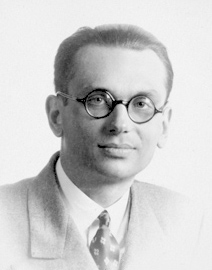
Godel's Proof - mostly ignored - destroyed mathematics' perfection & changed my life. Graphic novel Logicomix makes this great work accessible & adds human/historical context (Bertrand Russell et al). I hope it works for you. SteveG
PS: Pre-Logicomix, more self-revealing description of the impact of Godel's work on me

Logicomix could have changed my life in 1960. That's when I first read _Godel's Proof_ by Nagel & Newman, which destroyed my beliefs about mathematics' purity, integrity, and completeness. Ever since, I've been puzzled and frustrated that so few people - even so few mathematicians and philosophers - recognize the brilliance and historical significance of Godel's Proof. Logicomix provides the historical, philosophical, and human context for the monumental intellectual achievements of Godel, Wittgenstein, Russell & Whitehead, and others in the early and mid-20th century.
"...Einstein told people that he went to his office “just to have the privilege of walking home with Kurt Gödel.” Part of the reason, it seems, was that Gödel was undaunted by Einstein’s reputation and did not hesitate to challenge his ideas. As another member of the Institute, the physicist Freeman Dyson, observed, “Gödel was . . . the only one of our colleagues who walked and talked on equal terms with Einstein.”