Showing posts with label professional development. Show all posts

Wednesday, October 07, 2009

I. Programs make faster, better educational progress when they're world class scroungers

Earlier this week I described my mistaken belief that one should pay most attention to the newest ideas, especially if you can create your own idea or phrase, or at least your own wrinkle, and then claim the credit for being first.

The folly of that belief was pounded home for me in 1996. That was the year that Arthur Chickering suggested that we write an article on how to use technology to implement the 'seven principles of good practice in undergraduate education.' He and Zelda Gamson had summarized these seven lessons from educational research a decade earlier.

I replied that such an article was unnecessary. “Everyone knows how to do this already,' I told him. 'According to your seven principles, when students cooperate, educational outcomes usually improve. Anyone can see that using email can provide new avenues for students to cooperate. And the kinds of complex, real world projects made possible by computing often compel students to work in teams. Who needs an article to tell them that? It's old news.” Chickering persisted. So we wrote the article, got it published in a little newsletter, and soon put it on the web. Very quickly, 100 people per month were visiting our article. Then 200, and 400. A decade later, over 5,000 people per month were taking a look at it . Not bad for an article about ideas so obvious that I'd thought an article totally unnecessary.

Crucial question: How do you spread ideas and skills from the 5% of faculty for whom they're old news to those who would also respond, “That's wonderful!” if they ever heard about the idea or tried the skill? These blog posts are about using technologies in a way that can improve what's learned, who learns, and how they learn. To achieve that kind of change, engaging large numbers of mainstream faculty can be important. Each of them may not need to change what they're doing very much, but they each would probably need to change a little. Suppose it's a change they'd like if they ever heard about it; how can we help them notice the possibility in time?

Steve Gilbert, Flora McMartin and I did a major research study for MIT and Microsoft several years ago. Microsoft had made a multi-year, $25 million grant to MIT, and chunks of that money were being awarded to MIT faculty to do pioneering projects involving educational uses of technology. Our research: discover factors that influenced whether the best of these innovations were ever used by faculty other than their original developers.

One story from this MIT/Microsoft study suggests an important lesson for any program that wants to accelerate the pace of improving teaching and learning with technology.

Pete Donaldson is a Shakespeare scholar at MIT. For years before the Microsoft grant became available to MIT faculty, Pete had been experimenting with ways for his students to use film clips (without violating copyright) in their papers and online discussions. He'd had some success, enough to give workshops on the topic and to be a keynoter at the Shakespeare Association of America, where he gave a spectacular demonstration. His use of video clips, however, relied on an assembly of expensive equipment. Then he received a grant from the MIT/Microsoft iCampus program. The support enabled programmers to work with him, and to figure out a much more inexpensive strategy. The resulting software was called the Cross Media Annotation System (XMAS). Pete used the SHAKSPER, a popular listserv in the Shakespeare community and a mailing list of people who had attended his prior workshops to ask if anyone would like to use this free service in order to incorporate film clips into their Shakespeare courses. Quite a few did, especially because they knew and trusted Pete. One comment we heard from several adaptors: Pete wasn't threatening because he wasn't a techie, himself. He was like them. So if he could use XMAS, so could they.

The story is not all success. XMAS ought to be a great tool for film courses taught by film scholars, even more than for Shakespeare courses taught by English professors.

But Pete Donaldson is not a member of that community of film scholars, doesn't go to their conferences, doesn't know their listservs, and doesn't write in their journals. Nor do the other English faculty he has helped.

At some point, XMAS and Donaldson's techniques for using it may be adapted by a film scholar who, like Pete, uses the idea for teaching and for research and who, like Pete, has a yen to help his or her colleagues. And then the use of XMAS may begin spreading like a virus in that community.

Let's pull these threads together.

In the real world, instructors rarely have much time to uncover new ideas. Nor can they can take many risks (e.g., fear of embarrassment, wasted time when they're already over-committed, risk to a tenure case). That's one reason why new ideas about teaching and learning tend to spread so slowly. However, it can help to hear about such ideas from peers with a reputation for this kind of improvement (especially from peers who teach similar courses to similar students, even at other institutions).

Therefore, I suggest that any institution that wants to make unusual progress in TLT ought to help create and sustain faculty learning communities whose members often (a) teach similar courses, and (b) come from different institutions. If those similar courses have similar students, and the faculty have similar styles, so much the better. That way, if one faculty member has an idea, or uses a technology, or has a puzzling experience, it should be relatively easy for others to emulate. And, by including faculty from other institutions, you and your colleagues will hear about new low threshold steps much more quickly.

You can't search everywhere for everything. That's another reason why it's so important to set one or two focused priorities. Those priorities should help faculty and staff focus their searches for ideas. Become a world class scrounger and borrower of appropriate teaching ideas and materials from around the world! Ironically, that's also a great way for faculty members and their program to get a reputation as world class innovators.

PS. If you don't have much money, search for great ideas in countries where money has been scarce for some time.

Monday, September 28, 2009

8. Support strategy: Help a few faculty; teach one new technology after another

The topic of this series of blog posts is how to use technology in ways that, over time, result in substantial improvements in teaching and learning. When I say "substantial," I am pointing to hopes that many have had for educational evolution, perhaps even revolution, triggered by the use of technology. Each Monday I describe something I once believed about how to make such major, long term improvements, a belief I question today. Last Monday, we discussed the content of faculty support offerings (services focused either on technology OR on teaching/learning).

Today, I'd like to hear your observations on scale of faculty support: size of the change in teaching practice by faculty, number of faculty helped, time scale (frequency of change of topics for support), and total budget for support.

Traditionally small support budgets for faculty have divided among two or more units (one in the technology unit, perhaps someone in distance learning, staff in the library, staff in the teaching center, staff in colleges or departments).

Historically, many of these units would respond to technical changes as quickly as possible ("Which technologies are the subject of the most buzz this year?"). Then the unit would offer faculty workshops during the term and during the summer to help faculty learn to use that new technology. To attend such a session, faculty would need to set aside more than hour (sometimes much more) and go to a different building. Limited interest, that time requirement, and size of computer labs would combine to limit attendance: a few faculty at a time. Help desk operations would assist one faculty member at a time.

Costs: Because only a few faculty members could be helped at once, because each person was being helped to master a major technology, and because the topics of support might change rapidly (with expenses to develop each new support unit), the cost for each faculty member receiving support (including the faculty member's own time to attend and to master that new technology) was probably substantial (though it was rare to see estimates of such total costs).

Outcomes: Even after backbreaking effort by each tiny support unit, it's possible that only a few faculty could describe how they had improved teaching and learning in their courses by using that support. And I'd guess that no academic department could describe any cumulative improvement in teaching and learning made in one their degree programs over the years with aid from a technology support unit.

Is this a good description of what used to happen, or what still happens? What have you seen? (Depending on which URL you used to see this post, you can post your observations either by clicking on the phrase "Post a Comment" below or else by clicking the word "COMMENTS" to the right of my name below.)

Friday, August 07, 2009

Priorities for TLTG Online Symposium 2009 - Fac/Pro Dev/Support

Priorities for Faculty/Professional Development/Support Online Symposium

August, Sept, 2009, the TLT Group, Inc.
Frugal Innovations: Faculty Roles and Programmatic Support
What should we focus on first, next?

Include Exclude 1st results from similar online poll 8/4

This Web Page: http://preview.tinyurl.com/TLTG-FrugalPriorities09


Try to Include topics, issues, questions, activities, challenges, strategies - In what order?


We seek participants' input for determining the
order in which we address some of the following in this 2009 Symposium. We will also welcome
polite responses to "How could you have been so stupid as to omit
XXXYYYZZZZZ, which should be one of the top priorities for this
series?"


  • Cope with $ Cuts
    How to cope with current budget cuts just for now? or forever? Planning/hoping for return to "normalcy"?

  • Info for Decisions
    What kinds of information or data will really effect related decisions (by whom?) in the next 12 months?

  • Nanovation, Extermissions, & Milli-Everetts
    See also: "Milli-Everetts - Smallest Essential Steps for Incremental Exponential Education Revolution: Nanovation?"
    Nanovation = Intentional use of new resources for "sharing forward" improvements
    and innovations in ways that multiply impact (like "viral marketing,"
    - morally and intellectually responsible version of "Ponzi
    scheme"/Pyramid/Chain Letter; Extermission = Intentional, informal outreach - used during TLT Group's online
    sessions about Twitter in July, 2009.
    Milli-Everett = The smallest effort required to enable and encourage at least one teacher to at least:

  • Make one improvement in one course,
  • Get a little feedback and improve that improvement,
  • Help two at least colleagues each make similar improvements - and each help at least two more colleagues ....
  • Mid-Level Roles
    Role of mid-level academic professionals (dept
    chairs, division leaders, deans, …)in success/failure of dissemination, innovation, ...
  • Gmail Decision
    Tools that appear to have great potential for
    teaching/learning and become even more accessible when all students and
    others have Gmail accounts - implications for budget, policy, operations, teaching/learning
  • Using Un-Owned Resources
    Web 2.0 -
    the difference between "free beer and a free puppy"; who is
    responsible for what kind of support and usage policies, standards when
    the college or university cannot own or control the resource? - implications for budget, policy, operations, teaching/learning
  • Handheld Devices
    Love em or leave em? Use in courses or forbid in classroom? Clickers, PDAs, smart phones, netbooks, audio & video recorders -
    - implications for budget, policy, operations, teaching/learning
  • Back-Channel Communication
    Constructive "back-channel" communication - anonymous or not,
    sanctioned or not!
  • Brief Hybrids
    Taking advantage of these compact combinations of plans, media, activities, references, to make small low-risk, low-cost course improvements: Dipping a toe in
    the shallow, quiet end of the raging technology sea!
  • Textbooks: Evolution or Extinction?
    Emerging alternatives and variations. How
    changes in technology are both impeding and facilitating the
    opportunities for students to take their own notes and engage actively
    with readings and other learning resources.
    The myth of standardized resources for independent learning.

  • Fundamental Paradox of Faculty Development
    Recognize and try to reconcile these two approaches:
    A. Rational: emphasizes data, assessment, "scalable" strategies
    B. Personal: emphasizes trust, individual differences, relationships and growth


    Address these provocative-but-useful questions:
    Why is Faculty Development a low institutional priority?


    Why are so many
    faculty members still, in 2009, ''assessment-phobic'' and ''rubric-ignorant''? [Maybe we need to
    find Latin or Greek terms for ''assessment-phobic'' and ''rubric-ignorant' -
    ha! ha??]


    What could be done to avoid or reduce disproportionately large budget cuts for faculty development? So that when we return to better economic times, a larger portion of institutional resources will be committed to faculty development?
  • Collection & Dissemination Challenge
    Agree/disagree/deal with: Most conscientious and valuable efforts to collect, assemble, publish, and get others to use valuable practices, policies, and ideas for improving teaching and learning in higher education fail to reach more than a few percent of all faculty - ever, certainly not in a year or two. Its getting even more difficult to get anyone to pay attention to any message or information - even about resources they need and are already entitled to!
    How can we enable and encourage effective exchange of information and innovations among Symposium participants, their own Institutions, even more widely!
  • Faculty Learning Communities - Communities of Practice

  • Even More Important!
    "How could you have been so stupid as to omit
    XXXYYYZZZZZ, which is the one that REALLY important to me? It should be one of the top priorities for this
    series!"


Return to Top


Try to Exclude the Seductively Plausible and Unrealistically Contingent:
topics, issues, activities
, challenges, strategies

We'll try to exclude from our discussions topics, etc. that are

Seductively Plausible but we already know they just don't work or they're unlikely to be
accomplished in a short time with scarce resources

Unrealistically Contingent on
major changes in campus culture that are still not within reach (e.g., changing the promotion/tenure system)


Return to Top

Wednesday, August 15, 2007

Volunteer Work New Orleans MERLOT Conf Aug 6 2007

The annual MERLOT conference last week in New Orleans was even more useful and enjoyable than previous ones. Thanks to Diane Didier from the Louisiana Board of Regents. With the support of the MERLOT Conference Program Committee, she organized a volunteer work day on August 6.

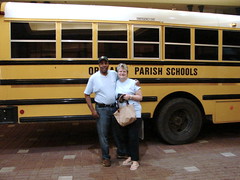
So Sally [Gilbert] and I had the privilege of joining about 30 others last Monday for a half-day of "recovery" painting on the third floor of the John Dibert Elementary School in New Orleans - which had been under water for 28 days following Hurricane Katrina.

We learned a lot about what has been happening in the public schools and other parts of New Orleans since Hurricane Katrina.

The people who are have returned to New Orleans and stayed are still working hard. They face extraordinary challenges. They are truly inspiring.

I
t is truly shameful that so much more remains to be done to repair and reclaim this historically important and culturally unique American city.

[I've talked with many of you about the worsening "Support Service Crisis" about educational uses of information technology for years, but post-Katrina New Orleans has a REAL "Support Service Crisis" beyond anything we have ever feared.]


This volunteer activity was available to all registrants the day before the conference opened.
For more about this school, See: http://ed.uno.edu/Faculty/rspeaker/
Dibert/DibertNet/About.html.


Our excellent, amusing and conscientious leader was Troy Peloquin, a New Orleans 9th grade science teacher.


Some stalwarts did a full day, and the most stalwart of all worked outdoors scraping and sanding in the extreme heat and humidity. [ANYONE HAVE MORE PHOTOS WE CAN SHOW?]

Has anyone already produced an eClip or BHW [Brief Hybrid Workshop] about this? A BHW is an eClip + other resources. The included eClip is less than 5 minutes and the total BHW is less than 15 minutes. More about eClips & BHWs

Seems like a wonderful idea to offer volunteer options the day before or after ANY conference in any city! Great way to learn more about the city and to develop constructive relations between visitors and locals.

------------------------------------------------------

THANKS, BEE!
Additional photos BELOW were selected from postings by Barbara "Bee" Dieu in Technorati posts and Flickr posts with the tag "merlot2007onlap" [with her "Warm regards from Brazil"]


For more about MERLOT Int'l Conf 2007, see D. W. Proctor's blog: "ProEd Portal"

Monday, June 25, 2007

"Paris je t'aime" and Brief Hybrid Workshops

"Paris je t'aime"
18 brief movies (average 6 minutes, many less than 5) one after another, each filmed in Paris, each a complete episode, each having something to do with Paris and with love. The directors, actors, crews had no other obvious limitations and the composite they achieved together is funny, surprising, poignant, and memorable.

Wikipedia (June 24, 2007):
http://en.wikipedia.org/wiki/Paris,_je_t'aime

Official Web Site (June 24, 2007 - according to Wikipedia):
http://www.firstlookstudios.com/pjt/
Watch the trailer! (Just under 2.5 minutes)

The trailer is charming, and only slightly dilutes and misrepresents the quality of the entire movie. Can't blame them too much for trying to use the popularity of Natalie Portman's face as the beginning of the trailer, but this movie absolutely does NOT dwell on her face or any other easy option. Together, the 18 clips offer glimpses and insights into many more dimensions of love than suggested either by the trailer or by my own expectations of what could be done by these filmmakers under these limitations.

When Sally told me she wanted to go to a movie last night and that this was the one, I reluctantly overcame my end-of week lethargy and joined her. Especially after she told me she had already purchased the tickets online. We were a little later than we liked arriving at the theater (parking on a beautiful, warm summer night in Bethesda Maryland was challenging).

Sally went in to get our seats while I waited in line to buy the largest popcorn bag and some bottles of water - and I thought several times about when I would get to the restroom. I decided that I would try to last through the section with Juliette Binoche (one of my favorites - especially since seeing her in Blue) and then would slip out to the bathroom. I didn't expect I would much mind missing one or two episodes.

I joined Sally in the theater just in time for the beginning. Juliette Binoche was not in the first few. But I never thought again of leaving my seat. Each clip was complete. Some were quite funny. Many were poignant. Some were powerful, memorable, surprising.

In the last year I've become obsessed with the educational potential of "Brief Hybrid Workshops" - combinations of brief "eClips" with face-to-face or online synchronous interactions. By "eClips" I mean multimedia recordings available via the Web. We're combining the new power, availability, ease of use, and low price (much free) of new tools and resources for producing and publishing eClips with Todd Zakrajsek's idea of "5-Minute Workshops". Visit our growing set of ideas and resources and links to some great examples about Brief Hybrid Workshops at http://www.tltgroup.org/tlt5.htm

"Paris je t'aime" demonstrates the remarkable variety and power of what can be communicated in a few minutes by talented people. I don't expect that our educational "brief hybrid workshops" can often achieve anything close to this level, nor do we need to. But if we move even a little in this direction, we will achieve a lot!

I hope you will be inspired - not daunted - by the quality and variety of episodes in "Paris je t'aime," to join our work on Brief Hybrid Workshops.

Please send more examples of brief, effective "eClips" or ideas for using such things for educational purposes - especially to help with enabling and encouraging faculty members to take advantage of new opportunities to improve teaching and learning with technology.

Send to gilbert@tltgroup.org or, better, add a comment to this posting - click on "comment" below. Please include your email contact info so that we can invite you to introduce your idea in one of our online sessions!

Sally and I are going to return to see "Paris je t'aime" again soon - maybe tonight.

Hope you enjoy it, too - soon!

SteveG

Tuesday, June 12, 2007

Constructive Criticism - Podcasts, eClips, Hybrid Workshops

Helping Colleagues Improve Podcasts, eClips, and Brief Hybrid Workshops

Guidelines for:
1. Author/originator who is going to ask someone else for constructive feedback
2. Someone who has been asked to give helpful feedback


Google Document - where we're building lists for guidelines (send email to star@tltgroup.org if you would like to be added as a "collaborator" so you can edit; otherwise, if you wish to add a comment, do so at the bottom of this blog posting)
Web Page - for same topic

Thoughtful comment from Cindy Russell, UTHSC (visit her valuable blog, web pages!):

Some of what I started thinking about as I looked at the above (comprehensive, certainly) is that beauty/evaluation is in the eye of the beholder. Too many words for some are not enough for others. Evaluators are crucial to select correctly - but evaluators can't be all like the developer of the clip. If they are, then the thoughts may be too similar and there won't be sufficient diversity in the evaluative comments. I wonder if part of what I'm struggling with is how many different versions/variations on the delivery of material we need. Not the difference between a YouTube and a Google video. But the difference between a video, a text page (with and without screenshots), audio only, a website with additional links, etc... There will always be "power" users who just need a bullet-pointed list of items and they're good to go. There will always be some folks who need the very complete version - and still want more. I struggled with this when I created the Audioclips site (http://technology-escapades.net/?q=node/22). And I still think I need to do something different with the content.

One of the things that I also struggle with is the narrative overload of a lot of what we do. It's a real challenge. I think it can be a turnoff for some people as they may think "if it takes that many words to say it, then it's too complex for me." While I'd never want to prevent anyone from entering any portion of a site that they wanted to explore, sometimes I think it can be overwhelming to people and then they stop instead of doing something more/different. Solutions????? -CynthiaKRussell 6/9/07 8:24 AM

Monday, June 04, 2007

Quick Start - Introduce Yourself - Self-Introducing eClips - Fundamental Questions (4-min audio incl.)

Play Steve Gilbert's sample self-introducing 4-minute eClip. Produce your own by using the Quick Start directions or other supportive materials. Add the URL for your own version as a comment to this blog posting - see below! Note that by doing this you are making your info accessible to anyone who might stumble upon it in the Internet, so please don't include anything that you don't want "public."

I look forward to "meeting you" or getting to know you a little better through your first eClip!

Steve Gilbert

NOTE: MORE DETAIL THAN YOU PROBABLY WANT OR NEED ABOUT HOW TO LEAVE A COMMENT HERE
To be sure we receive your comment, click on one of the options below the box in which you entered your comment. Then type in the letters that you see in the weird script in the most obvious place - the "word verification" box. THEN CLICK ON "LOG IN AND PUBLISH" - DON'T WORRY ABOUT THE "LOG-IN" PART. You do NOT need to have a Blogger account to leave a comment. If you wish to comment anonymously, click in the circle to the left of that option. If you want to avoid getting a Blogger account, but want to indicate who you are, add your name and contact info WITHIN your "comment" and then choose the "anonymous" option.

Saturday, June 02, 2007

CheatSheet for LecShare Pro
Begun 3/29/07 Steven W. Gilbert
All other contributions, amendments welcome!

Intro

I've just begun using LecShare Pro - recommended by Norm Coombs - and I'm VERY excited about some of its capabilities and features.

  • Basically, it supports attaching audio files to PowerPoint slideshows.
  • It is VERY easy to use. It is inexpensive.
  • It almost forces the user to make the result accessible to those who use screen reader software and/or have visual disabilities.
  • It enables automatic production of several different versions in a variety of useful formats for display and use on the Web or distribution.

Help/Support

Help files for LecShare can be found at http://www.lecshare.com/help/index.html

Steve -- for newbies like me, we might want to include a basic intro on all our CheatSheets that included answers to questions like: 1. How much does it cost? 2. Where do I get it? 3. How much memory will it take on my machine (if any)? 4. Any danger of it bringing in viruses? 5. Maybe-- we want to give it a "learning curve" ranking -- easy climb, moderate grade, steep?? (BH) Great suggestions Bonnie! (swg)

However, like most software, I'm finding I need to learn a few "little" things to enable me to use it smoothly and quickly. Hence, I'm beginning another of our CheatSheets - as a Google Docs document so others can help develop this. The goal is NOT to reproduce help and FAQ services avail from LecShare. But we can provide a summary (list) of what issues are covered in the HELP material. See Google Docs format. (BH) yes! Ideally, I'd like to end up with a version of this CheatSheet that can easily be printed on a single standard sheet of paper for easy reference. I hope you will try LecShare, and add your own findings and recommendations to this CheatSheet.

Thanks,

SteveG

PS: I'm including Greg Kraus from LecShare as a collaborator on this document because he has already been so helpful enabling me to produce MP3 files!

Questions (Post a Questions here:)

  1. Question: Should we include info here about using LecShare Pro to produce a file that can be uploaded into YouTube and what then becomes possible?
    See examples of YouTube usage based on export file results from LecShare Pro : http://www.tltgroup.org/TLT5.htm#Learning%20Space
    E.g., You can use the exported MP4 file NOT the QuickTime HTM file...
    Here's what the code for an inserted "screen" from YouTube looks like - can be pasted almost anywhere on a Web page; size is determined by the 2 pairs of numbers and to change the size you should change both sets in the same way at the same time (e.g., from two pairs of 400 & 300 to two pairs of 300 & 280; try to keep the ratio about the same)

  • Here's a sample of a link to the file in YouTube http://www.youtube.com/watch?v=ZjeJZEpegac00
  • Here's a sample of the code to insert to get the little screen to show up on the iVoc "this week" page (smaller screen than last time - on purpose)

<object width="300" height="280"><param name="movie" value="http://www.youtube.com/v/ZjeJZEpegac"></param><embed src="http://www.youtube.com/v/ZjeJZEpegac" type="application/x-shockwave-flash" width="300" height="280"></embed></object>


Safety First - Changing Slides, Audio AFTER Creating Slideshow with LecShare Pro
Safest way to make changes in individual slides or individual audio clips AFTER using LecShare Pro to create a synchronized slideshow seems to be
1. start with a fresh PPT file
2. make changes to individual slides - including deleting and re-ordering as well as adding new ones
3. edit any audio clips that are going to be imported/synchronized
4. begin using LecShare Pro. Open the PPT file. Import any new versions of the audio to the specific slides.

What LecShare Pro does to/with audio
When you begin to create a new LecShare Pro audio-narrated slideshow, the first step is to open a PowerPoint file from within LecShare Pro (> File > Open). When LecShare Pro opens that file, it automatically creates a new file with the same name as that PowerPoint file, but with the extension ".mov" instead of ".ppt". The new file is automatically placed in the same folder as the original PowerPoint file. From this moment forward, all editing info and adjustments made by using LecShare Pro are stored as modifications to the .mov file and/or the .ppt files with the same name. Regardless of whether you record new audio within LecShare Pro or import audio files from elsewhere for this new narrated slideshow, the sound that will be heard by anyone "playing" the resulting slideshow is stored within that .mov file.

Note: seems that there are only 2 import options: One file for the entire slideshow OR one file for one slide. I don't think it is possible to import one audio for 3 slides... but ...???

Clearing Changes that LecShare Pro Makes to a PowerPoint File
As soon as you begin taking any action at all with LecShare Pro after using it to open a PowerPoint file, it begins making modifications to that file. If you might want to do something else with that PPT file, it is a good idea to make a copy of it which you save in a different folder. To be completely safe, save it with a different name. Do that BEFORE you begin using LecShare Pro on it. [Greg: Maybe LecShare Pro should remind/prompt users to do this or make it happen automatically as part of the process of opening that PPT ]file.
There is a "Clear PowerPoint" option under the "Edit" menu in LecShare Pro. Click on that and choose which of the kinds of info that were created by LecShare Pro WITHIN that PPT file should be removed. If you clear everything, the PPT file returns to its original condition (truly?).

Being Careful About Synchronization of PowerPoint and .mov files

LecShare Pro modifies the PPT file and creates a .mov file so that each includes info that is essential to the synchronized result.

Therefore, doing anything likely to change that info in one of the files without changing the other accordingly can disrupt the synchronization (and changing the location or name of one of the files will also be disruptive). This means that making changes to either file OUTSIDE of LecShare Pro can be risky. LecShare Pro can detect when the .mov file is no longer located where it was originally and LecShare Pro tries to guide the user to find that file in its new location and enable LecShare Pro to remake the connection. NOTE: The user may find that LecShare Pro SEEMS to be asking to locate an audio file with a peculiar name - but what it really wants is the location of that original .mov file. (truly?)


Multiple Versions of Presentations

- Each a modification of the same original PowerPoint file with different narration

If you know ahead of time that you are going to be making multiple versions of a presentation, each with different audio, it would be best to make a copy of the PPT file before adding any audio. You could add the accessibility info in first, save it and make copies of it, then open each one to add in the appropriate audio files.

Finding Individual Audio Clips Associated with Each Slide
Whenever you decide to create the files that enable others to "play" this slideshow, you use the > file > export options. If you select the "HTML" as one of options for export (you can have LecShare Pro export as many of the 4 options as you like at the same time!), then LecShare Pro will create an individual mp4 file for each audio clip that has been recorded or imported for each slide. I.e., if you have 18 slides and each has some audio via your work in LecShare Pro, then within the folder labeled "audio" buried down in the folder labeled "html" there will be 18 mp4 files numbered from 1 to 18. Those numbers indicate which slide that audio clip is synchronized with.

Editing audio files for LecShare Pro
You can use the conversion technique described below to change the MP4 files that you find within the "audio" folder within the exported "html" folder into MP3 files. Audacity (free, moderately easy to use, effective audio editing software) can then be used to edit the MP3 versions. If you now return to LecShare Pro, open the same PowerPoint file within the same location that you were working on already (so that LecShare Pro finds both the PPT and MOV files in the same folder) you can now go to any individual slide and import the edited MP3 audio file. LecShare Pro seems equally adept at importing audio files in either MP3 or MP4 for this purpose. LecShare Pro will automatically adjust timing so that the new audio file imported for a specific slide will have that slide displayed while that audio clip is being heard - no shorter, no longer. The audio that had previously been saved for that slide within the MOV file will be deleted and replaced by this process.
NOTE: Converting the MOV file itself into an MP3 file produces a complete audio-only version of the slideshow - suitable for use in podcasting, etc.


Revising a Slideshow Already Created Using LecShare Pro

To avoid some messiness, put the PowerPoint slides in a new folder with a name different from the folder in which the LecShare-created files have been stored. Move or copy into this new folder any audio files that you intend to import into the new version of the slideshow. My guess is that to be really safe, only use audio files that are MP3 or Wave format. I'm going to try to learn more about the requirements for minor modifications so that I won't have to go through this entire re-development effort.


Converting audio produced when using LecShare into MP3 format using iTunes
It can be difficult to find and use ONLY the audio portion of some of the files created when you export the final result of your work in LecShare Pro. If you need an audio-only MP3 format file version of your work for any reason, this clever use of a well-hidden feature of iTunes will do the job! (Thanks to Greg Kraus from LecShare for this info E.g., for use in a "traditional" audio-only podcast; e.g., put the MP3 file on the Web and insert a link to that file in the title area of a Blogger blog posting to automatically create a podcast available in iTunes, etc. - requires setting up Blogger, iTunes account, use of FeedBurner, etc.)

iTunes can do an mp3 conversion
PREPARING ITUNES
  • Open iTunes on your own computer
  • Go to: Edit > Preferences > Advanced
  • Click on the “Importing” tab
Under “Import Using”, select “MP3 encoder”.
[This will allow you to see the “Convert Selection to MP3” option later.]

USING ITUNES CONVERSION TO MP3 CAPABILITY
  • Copy audio recording file produced by/within LecShare Pro [see below for hints about finding, identifying this file.]
  • Open iTunes
  • Open to the Music section of iTunes - where your own music and other audio-only files are listed within iTunes
  • Select: File > Import
  • Browse to the copy of the audio recording file that you made
  • Select the copy. Import it into iTunes.
  • The name of the copy should now appear in your list of music/audio files within iTunes.
  • Right click on the name of that file WITHIN your iTunes music/audio list.
  • Select & click on the “Convert Selection to MP3”
  • That should produce another copy of the same file within your iTunes music/audio list.
  • Make sure you can tell which of the 2 versions is the MP3 version (when you look at "info" about the file it will probably say something about mpeg format and have a numeral "3" somewhere in the info. It will definitely NOT be the same format as the audio file that you copied.)
  • Copy this new file.
  • Paste this file wherever you want to save it on your own computer.
  • Check its properties to be sure it is now an MP3 file - it most likely now has an " .mp3 " extension, and that is confirmation enough!

NOTE: The only slightly tricky aspect of this process is identifying the correct audio file within the stuff that LecShare Pro can produce as byproducts when you use it to Export to several different kinds of files.
The audio file you are seeking for this purpose is obviously NOT already an MP3 file!
Most likely it is an " .mov " file. But it is NOT a .mov file that is a full QuickTime movie.
To find the correct .mov file, try this: If your original PowerPoint file is called “biology.ppt”, there should be a file called
“biology.mov” in the same folder; that 2nd file is created automatically and immediately when you BEGIN to work on the selected PowerPoint file within LecShare Pro.


It's a treat to be working with you!

Here's my attempt to convert our most recent exchange into something we can put in the "CheatSheet". Pls answer my indicated questions and change anything I've misinterpreted or misrepresented.

Many thanks.

SteveG

Hi Steve,

I love the questions. It helps us clarify where we need to refine the

editing process so that it is more intuitive.

The audio synchronization screen is admittedly probably the least

intuitive part of the whole LecShare Pro process. There are some minor

enhancements being made to it in a very near release.

> My guess is that when I import a large audio file for

> synchronization with all slides, the process does not actually cut out

> any of the audio file. Rather, there is probably some technique by

> which LecShare Pro assigns numbers to the audio and a pair of numbers

> to each slide.

20070412

LSP = LecShare Pro


IMPORTING AND SYNCHRONIZING AUDIO IN LecShare PRO

Click on Audio pull down menu;

Click on Import

Click on Whole Presentation

Find and click on the audio file that you want to import and use

Click on Audio pull down menu;

Click on Synchronize

When you import audio for the entire presentation at once all of the

audio is stored in slide 1. The time stamps you see just below the image

of that slide

in the "Synchronize Audio" tray indicates what

portion of the audio is assigned to each slide. Each slide will eventually

have 2 time stamps displayed:

the top one indicates the time in seconds from the beginning of the

entire audio to the beginning of the audio clip that plays during the

display of this individual slide;

the second time stamp - below the first - for a slide indicates the time

in seconds from the beginning of the entire audio to the END of the audio

clip that plays during the display of this individual slide;

Just after importing,

slide 1 will have a time stamp of 00:00:00 and a time stamp showing how

long the movie is.

The easiest way (the simple method) to divide the audio clip is to

clear all the time stamps first.

Click on "Clear" button.

The matching or time assignment process is making a record of the

CURRENT location of a pointer within the audio file and assigning that

location to a slide as the time at which that slide will be beginning

to be displayed or ending its display interval. The CURRENT location of

that pointer is indicated by the numeric reading that is displayed within

the small window just below the right-most slide image in the slide tray.

When you double click on a slide (NOT on either of the numbers showing at

the bottom left corner of the picture of a slide) , LSP will assign the

CURRENT LOCATION IN THE AUDIO FILE to that slide as the STARTING TIME for

the display of that slide. Usually the audio player is playing

when you do this, but it doesn't have to be.

When you double click on a slide LecShare Pro will automatically assign the

time stamp to have that slide start displaying at that number of seconds after

the beginning of the whole audio.

To start things off, double click on slide 1 - that will assign the time stamp

of "00:00:00" and **the audio will start playing.**

When the audio gets to the point you want slide 2 to display, double click slide 2.

LSP will automatically assign the end time to slide 1, and the start time for

slide 2 - DIFFERING ONLY BY .001 SECONDS.

Continue this through all the slides.

FIXING TIMING MISALIGNMENTS

If you mess up, move the audio player LOCATION back some and

double click on the slide again. You

will be prompted to overwrite the current time stamp

<<GREG, I NEED SOME HELP HERE ABOUT "OVERWRITE"

- AND WHAT THE EDITING OPTIONS OF "ALWAYS OVERWRITE" AND

"ALWAYS DELETE" REFER TO. THANKS.>>

After you double

click on the last slide to assign the start time, you can choose "Done"

and the ending time stamp will automatically be assigned to the last

slide for you.

If the starting and ending times of adjacent slides get misaligned,

you can try to move the audio player back (by moving the slider and/or using the

"play" and "pause" buttons) then click the second of the two slides.

You can also try clicking on the exit time for the first slide to reassign it.

<<GREG, I don't understand the preceding sentence>>

If the preceding steps do not work to remedy the misalignment, unfortunately,

you have to press "Cancel" and start the synchronization process over again.

AUDIO TIME SYNCHRONIZATION "ADVANCED METHOD"

The advanced method lets you decide exactly when a slide starts AND STOPS

displaying. The simple method automatically makes the end time for one

slide come immediately before the start time of the next slide.

For the advanced method, say for example you have a lot of dead space

between a slide change and you want to get rid of it. You could assign a

start time for slide 1 to be 00:00:00 and an end time to be 00:25:00.

You could then make the start time of slide 2 be 00:28:00. If you do that

LSP will drop those 3 seconds between the end of slide 1 and the start of

slide 2. That 3 second audio span literally gets deleted.

Slide 1 goes straight to slide 2 with no dead space.

**To assign explicit start and end times for each slide, double click on

the start or end time stamp rather than the image of the slide.**

<<THERE WAS SOMETHING IN SOME OF THE DOCUMENTATION THAT SEEMED TO DISTINGUISH

BETWEEN SINGLE- AND DOUBLE-CLICKING. IS THAT SIGNIFICANT? IF SO, WHEN

SHOULD WE DO SINGLE VS. DOUBLE? ALSO DOES IT REALLY NOT MATTER AT ALL

WHETHER THE AUDIO IS PLAYING OR PAUSED WHEN WE CLICK ON ANY OF THESE THINGS?>>

The "pause" "play" or "stop" buttons control the playing of the audio.

These are there for convenience and are not necessary.

<NOT NECESSARY FOR ANYTHING?>

They enable you to stop the audio playback if needed. They are actually there to

assist with accessibility needs.

CLICKING "OK" when doing synchronization will reassign the audio clips to

the various slides as you've

assigned in the synchronization window up to that moment.

If there are any audio

segments not assigned to a slide they will be deleted (as in the

example with the 3 seconds of dead space). The file is saved at this

time as well and the changes are made permanent.

Before clicking "OK" none of the time assignments are permanent and

they will disappear if the file is closed in any way BEFORE clicking on "OK"


Friday, May 25, 2007

Gandhi's List: - Brief Hybrid Workshop - SUGGESTIONS

Gandhi's "Seven Blunders of the World" That Lead to Violence ...Plus 6
Activity developed and revised by Steven W. Gilbert, TLT Group.
See: http://www.tltgroup.org/GandhisList.htm

Welcome your suggestions, etc. about how and when to use this Brief Hybrid Workshop and/or the eClip within it.

Pls click on "comments" or "post a comment" just below this posting to leave your suggestions for the TLT Group's Online Professional Development Workshops about educational uses of blogs, wikis, feeds, .... Web 2.0 + Social Networking
See more detail than you probably want or need about how to ensure we receive your comment/suggestion at the very end of this posting in italics.

Thanks,
Steve Gilbert

NOTE: MORE DETAIL THAN YOU PROBABLY WANT OR NEED
To be sure we receive your comment, click on one of the options below the box in which you entered your comment. Then type in the letters that you see in the weird script in the most obvious place - the "word verification" box. THEN CLICK ON "LOG IN AND PUBLISH" - DON'T WORRY ABOUT THE "LOG-IN" PART. You do NOT need to have a Blogger account to leave a comment. If you wish to comment anonymously, click in the circle to the left of that option. If you want to avoid getting a Blogger account, but want to indicate who you are, add your name and contact info WITHIN your "comment" and then choose the "anonymous" option.

Tuesday, May 01, 2007

Info Lit Assessment Online Workshop May 2007

Week 1 Recommended Activity

Write an outcome for your program, drawing upon one of the 9 principles. Start with that you think most important to work on at the current stage of development of your program. You may submit your work in one of 3 ways:

1. privately by email to Anne Zald
zald@u.washington.edu or Deb Gilchrist DGilchri@pierce.ctc.edu

2. anonymously - add it as a "comment" to this posting. Go to the bottom of this posting and click on "comments" or "add comment"

3. publicly -
- add it as a "comment" to this posting. Go to the bottom of this posting and click on "comments" or "add comment". If you have a Blogger account, use it. If not, include your name and contact info at the end of your comment.

Nine Principles of Good Practice for Assessing Student Learning
http://www.fctel.uncc.edu/pedagogy/assessment/
9Principles.html

http://www.tcnj.edu/~assess/principles.html

OTHER RESOURCES FOR THIS WORKSHOP

Archives of synchronous sessions and other info:
http://oli.tltgroup.org/2007/spring/ILAssessment/workshop.htm

Library Instruction Outcomes: Available in Microsoft Word

Characteristics of Programs of Information Literacy that Illustrate Best Practices: A Guideline http://www.ala.org/ala/acrl/acrlstandards/characteristics.htm

Information Literacy Competency Standards for Higher Education http://www.ala.org/ala/acrl/acrlstandards/
informationliteracycompetency.htm

Task Force on Academic Library Outcomes Assessment Report http://www.ala.org/ala/acrl/acrlpubs/whitepapers/
taskforceacademic.htm

Principles of Good Assessment
http://planning.tltgroup.org/ILAFall2006/
Principles of Good Assessment.pdf

~~~~~~~~~~~~~~~~~~~~~~~~~~~~~~~~~~~~~~~~~~~~~~~~~~~~~~~~~~~~~~~~~~~~~~~~~~~~~~~
Anne Zald
University of Washington Libraries

Emerson - Compensation Essay


This is a "banyan" or "banian" tree. See last sentence in quotation below.

Also, see link to Web page for FridayLive! special session "Staying Sane - in Insane Times."


A. "For everything you have missed, you have gained something else..."

B. "...the compensations of calamity are made apparent..."

See below for more extended versions of these two brief excerpts from "Compensation," an essay by Ralph Waldo Emerson in "Essays — First Series"; see further below for citation, links to full text.

A. 1st Excerpt:

"… Every excess causes a defect; every defect an excess. Every sweet hath its sour; every evil its good. Every faculty which is a receiver of pleasure has an equal penalty put on its abuse. It is to answer for its moderation with its life. For every grain of wit there is a grain of folly. For everything you have missed, you have gained something else; and for every thing you gain, you lose something…."

B. 2nd Excerpt (part of last 3 paragraphs of the full essay):

" growth comes by shocks.

"We cannot part with our friends. We cannot let our angels go. We do not see that they only go out that archangels may come in. We are idolaters of the old. We do not believe in the riches of the soul, in its proper eternity and omnipresence. We do not believe there is any force in to-day to rival or recreate that beautiful yesterday. We linger in the ruins of the old tent where once we had bread and shelter and organs, nor believe that the spirit can feed, cover, and nerve us again. We cannot again find aught so dear, so sweet, so graceful. But we sit and weep in vain. The voice of the Almighty saith, 'Up and onward for evermore!' We cannot stay amid the ruins. Neither will we rely on the new; and so we walk ever with reverted eyes, like those monsters who look backwards.

"And yet the compensations of calamity are made apparent to the understanding also, after long intervals of time. A fever, a mutilation, a cruel disappointment, a loss of wealth, a loss of friends, seems at the moment unpaid loss, and unpayable. But the sure years reveal the deep remedial force that underlies all facts. The death of a dear friend, wife, brother, lover, which seemed nothing but privation, somewhat later assumes the aspect of a guide or genius; for it commonly operates revolutions in our way of life, terminates an epoch of infancy or of youth which was waiting to be closed, breaks up a wonted occupation, or a household, or style of living, and allows the formation of new ones more friendly to the growth of character. It permits or constrains the formation of new acquaintances and the reception of new influences that prove of the first importance to the next years; and the man or woman who would have remained a sunny garden-flower, with no room for its roots and too much sunshine for its head, by the falling of the walls and the neglect of the gardener is made the banian of the forest, yielding shade and fruit to wide neighborhoods of men. ["banian" = tree; see picture above]

Image of banian tree from:
http://www.bungsang.org/doc01/baniantree10.jpg

Citation, access to full text of Emerson's "Compensation" Essay:

Essay III Compensation (First published 1841?)
Available free online from Project Gutenberg:
http://www.gutenberg.org/etext/2944

Also see:
http://www.emersoncentral.com/compensation.htm and
http://www.emersoncentral.com/essays1.htm

"First published in 1841 as Essays. After Essays: Second Series was published in 1844, Emerson corrected this volume and republished it in 1847 as Essays: First Series."

Excerpts to Help Stay Sane - Quindlen

Link to Web page for FridayLive! special session "Staying Sane - in Insane Times"

A. "...always searching for some version of the truth...They have experienced firsthand the great soothing balance of human existence…"

B. "...biggest mistake I made is ...I did not live in the moment enough..."

As of May 1, 2007, you can find the full text of the Preface, 1st two essays in Chapter 1

http://www.chapters.indigo.ca/bookExcerpt/978081297027

A. "Real reporters are always searching for some version of the truth so that, in the long run, they can assemble the truth about the world out of all the stories they have covered and the things they have learned. That is why, in contrast to the common belief that they are the world’s great cynics, the best journalists are the world’s great idealists. They have experienced firsthand the great soothing balance of human existence. For every disgrace there is a triumph, for every wrong there is a moment of justice, for every funeral a wedding, for every obituary a birth announcement."

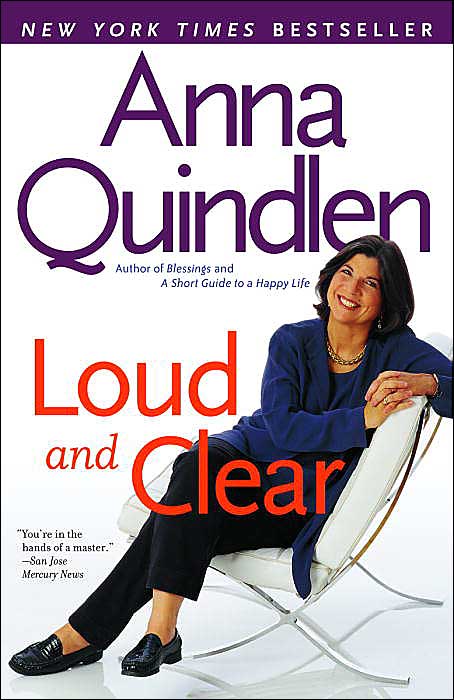
Above is from the preface of Loud and Clear, by Anna Quindlen, Ballantine Books; Reprint edition (March 29, 2005)

B. Below an exceprt from the same book about life - with 3 young children.

Chapter 1 "Heart" "Good-Bye Dr. Spock":

"But the biggest mistake I made is the one that most of us make while doing this. I did not live in the moment enough. This is particularly clear now that the moment is gone, captured only in photographs. There is one picture of the three of them sitting in the grass on a quilt in the shadow of the swing set on a summer day, ages six, four, and one. And I wish I could remember what we ate, and what we talked about, and how they sounded, and how they looked when they slept that night. I wish I had not been in such a hurry to get on to the next thing: dinner, bath, book, bed. I wish I had treasured the doing a little more and the getting it done a little less."


Friday, April 13, 2007

"Attending Genocide Conference" (4.5 Mins - Video)


Please watch/listen to "Attending Genocide Conference." (4.5 Mins - Video)


[Photo copied April 13, 2007, from "Portfolio - Being Human - Philosophy of Teaching: This, Too, Is Part of Being Human" by Kathleen Z. Young, Ph.D., Department of Anthropology, Western Washington University,

http://pandora.cii.wwu.edu/showcase2005/young/portfolio.htm]

This was one of first, and most provocative, responses to my request for examples of "clips" yesterday. It is embedded in a Website and related "portfolio" of materials that provide an excellent model for one way to extend the possibilities of a brief clip. By sending this sample I hope to prompt more of you to share clips and suggest different ways of using them.

This simply constructed videorecording is disturbing, perhaps profound. Young describes the atrocities of Srebrenica and her commitment to "not looking away." She ends with a hopeful explanation of new international responses to genocide. This clip is presented as her response to "Why did you take your students with you to the International Genocide Conference in Sarajevo?"

Please watch/listen to "Attending Genocide Conference" at:

http://pandora.cii.wwu.edu/showcase2005/young/showcase3.htm

First click on the above URL, then to begin this videorecording, click on the "play" (left-most) button on the control panel that appears beneath the viewing screen as shown here.

You may also need to increase the audio volume or listen carefully. It is worth it!


Please don't be intimidated by this example. We need to find a wide range of useful models. Far below in this message, I include links to a few other valuable examples that are much simpler. I hope more of you will be encouraged to share your first modest efforts! We need the LTA approach to 5-minute clips and hybrid workshops!

In four and a half minutes Kathleen Z. Young of Western Wash. U. calmly describes how she came to take a group of "… students to travel to Bosnia with me to attend an international conference on genocide in Sarajevo and participate in the excavation of a mass grave and the Muslim mass funeral and reburial of 600 of the 8,000 Bosniaks killed in the United Nation's 'safe haven' of Srebrenica in 1995."

You can go deeper into this experience and learn more about Young's teaching and the responses of some of her students by visiting other parts of this extraordinary Web-based "portfolio".

Student Reflections (about Genocide Conference trip - includes photos):

http://pandora.cii.wwu.edu/showcase2005/young/student_reflections.htm

Student Comments about Young as teacher:

http://pandora.cii.wwu.edu/showcase2005/young/student_comments.htm

Student Essay - text + photos - "Because I was There" - response to trip to Genocide Conference:

http://pandora.cii.wwu.edu/showcase2005/young/becauseiwasthere.htm

Excerpt from Young's website:

"The first time I taught the class on Islam and Conflict in Europe it was as an unpaid labor to prepare interested students to travel to Bosnia with me to attend an international conference on genocide in Sarajevo and participate in the excavation of a mass grave and the Muslim mass funeral and reburial of 600 of the 8,000 Bosniaks killed in the United Nation's 'safe haven' of Srebrenica in 1995. From the conference in Bosnia, the students traveled with me to Den Hague in The Netherlands and attended the trial of the Slobodan Milosevic. Students went with me to the new International Criminal Court, also in Den Hague, to meet with a judge on the new court and discuss the importance of anthropology in ending the impunity of the rogue actions of leaders committing genocide and crimes against humanity and helping the weak and victimized have a forum to speak their truths."

_______________________________________________

Comment added to TLT-SWG Blog Posting April 12, 2007

From Karen Casto, Director, Center for Instructional Innovation, Western Washington University, Karen.Casto@wwu.edu

At the Center for Instructional Innovation at Western Washington University we have been using the concept of short videos as part of our innovative teaching showcase published on the web each year since 1999. In past years the showcases have a theme, with last year's being "educating global citizens". We create both written and video materials for these showcases and our goal is for both faculty at our institution and faculty from around the world to be able to use this resource.

Last year for the first time we used Google to host our videos, in part because we had an ever changing campus video environment, but mostly because Google provides statistics for each video, and also allows users to download the videos, search for appropriate videos, and use them for their own purposes.

The two highest rated and most viewed and downloaded, according to Google, from last year can be seen at:
Teaching Russian [2 Mins 53 Seconds - teaching basic Russian by speaking (almost) only Russian from very first class session + other suggestions - SWG]

Inviting class to accompany teacher who was invited to give a paper at international conference about/at memorial to srebendsa genocide; description of what happened at the conference and roles and responses of students
Attending Genocide Conference

The full showcase can be seen at 2005-06 Innovative Teaching Showcase

http://pandora.cii.wwu.edu/showcase2005

These videos are all made here at the teaching/learning center, mostly by students.

Thursday, April 12, 2007

Share 5-Minute Clips, 5-Minute Hybrid Workshops

Please add a comment to this posting in which you provide a URL (Web address) for one or more 5-minute clips and/or 5-minute hybrid workshops. (Definitions below.)

Please add at least one sentence for each example in which you describe it. Please add your name and email address and any other contact info you would like - including times when you would prefer NOT to be contacted about this! If you have any trouble adding a comment, or simply prefer an alternative, send your info to gilbert@tltgroup.org

Thanks for your help!
Steve Gilbert

HERE ARE DEFINITIONS FROM HOME PAGE FOR THIS TOPIC
For more examples in many formats/media and other resources go to:
http://www.tltgroup.org/TLT5.htm

"5-Minute Hybrid Workshops" & "Clips"
Working Definitions - As of April, 2007
Use of term "hybrid" here is confusing to some. We welcome clearer 1 or 2 word alternatives.

Clip vs. Workshop
A "clip" is a pre-recording produced as a single computer file. It may include a variety of media elements: sound, images, text, etc.
A "5-minute hybrid workshop" is the combination of a "clip" AND some other files, activities, documents, ... intended for use together with a group of people in 5 minutes or less. (Of course, some groups may find the materials so fascinating that they extend the session well beyond 5 minutes!)

5-Minute Hybrid Workshops

  • Less Than 5 Minutes
    When run without interruption, the pre-recorded elements require less than 5 minutes!
    [Note: The person "playing" the pre-recording may be so intrigued by some references that she/he may interrupt the session to examine those items more closely. Such activities may quite legitimately extend the required time well beyond 5 minutes!]

  • Faculty/Professional Development (and the improvement of teaching/learning in specific courses)
    Its purpose is to support faculty development, professional development, teaching, or learning.

  • Combination
    It combines SOME of the following: media, modalities, resources, plans, and activities.
    It can have both synchronous and asynchronous components.
    Example A: Entirely synchronous. Within a face-to-face meeting, use of a 2-minute pre-recorded explanation of a technique in conjunction with 1 minute of silent thoughtful reflection and 2 minutes of open discussion.
    Example B: Synchronous + Asynchronous: Within a synchronous online meeting, "play" a 2-minute pre-recorded introduction of a new topic, ending with clear instructions about how to submit questions and comments via a blog for an assignment that is intended to require each student to continue or extend his/her thinking about this new topic for a few more minutes whenever convenient within the next week.

  • Individual or Group
    It may be intended for independent individual use or for group activities such as workshops. For example, a recording of an audio-narrated set of PowerPoint slides could be designed to introduce and demonstrate a single skill to a faculty member working alone in his/her office. Alternatively, an audio-narrated set of PowerPoint slides could be designed to explain a simple teaching strategy, describe one or two examples of its use, and suggest several questions for discussion among a group of faculty during a small portion of a departmental meeting.

  • Internet-Accessible Components
    It includes at least some components available via the Internet.

  • Low-Threshold
    It is to some extent an LTA [Low-Threshold Activities/Application]