Thursday, March 15, 2012

Dissecting Hybrid Workshop + Ender's Test; Chat Trnscrpt & Archive from TLTGroup's FridayLive! #TLTGFrLv 2/17/2012


Dissecting a Hybrid Workshop PLUS Update on Ender's Test
Recommendations, Insights, Challenges, Questions
Text Chat Transcript - including links - Below


DESCRIPTION OF TLT GROUP'S FRIDAYLIVE! SESSION FEB 17, 2012
What we learned from a hybrid FridayLive! and how it will help online teaching and learning:  focus on identifying what worked with our hybrid workshop, what didn't work, and why.
On Feb 10, Steve and TLT Group staff led a FridayLive! discussion  with two distinct audiences connected to each other in an Adobe classroom - one group was with Steve at the Lilly Conference on College Teaching, the other group was a collection of individuals from across the U.S. logged in individually to the Adobe classroom.
Recognizing that many faculty are facing a transition of their courses to some form of hybrid instruction, the TLT Group is always seeking opportunities to "walk the walk" in order to understand the challenges and appropriately make recommendations.

PLUS:  Update on Ender's Test
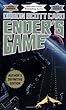
Our discussions in these past weeks about Ender's Game have been both fascinating and deeply satisfying. A portion of Friday's session will be spent delving deeper into the ideas of artificial instruction.  We're moving toward a Lilly test of Caring and a WGU test of who what education is good for.

Leader: Steve Gilbert, TLT Group


Text Chat Transcript 

 David McCurry, TLT Group: (2/17/2012 13:19) Welcome back to our regularly scheduled Friday Live!
 Steve Gilbert, TLT Group: (13:32) tnx, working on PPT!

Before there were Apps. "The Beauty of Low Threshold Applications" [LTAs] 1st pub 2002 Syllabus Mag - still APPlicable today!

"The Beauty of Low Threshold Applications" 2/2/2002 Steven W. Gilbert, Column in Syllabus Magazine (Now Campus Technology)
Highlights below added by the author ten years later - March 14, 2012.
[How closely do the characteristics of LTAs first introduced ten years ago in the article below fit the Apps we have begun to use in higher education today?
The last two paragraphs are especially applicable today. They're about:
- being unable to keep up,
- the need for increased collegial collaboration, and

- the growing importance of "open course" principles.]

[FULL TEXT OF ORIGINAL COLUMN]
There is a new imperative for many colleges and universities to engage "almost all" of the faculty in improving teaching and learning with information technology. The strategies I described in a previous Syllabus column can help, especially if they include the development of a collection of low threshold applications, or "LTAs."

Recent experience suggests that a new, larger group of mainstream faculty members is more likely to be receptive to what they perceive as only a modest change in their identity, role, or workload that might be imposed by new teaching and learning applications.

Tuesday, March 13, 2012

Recommended Readings 3.5 Written by Sally Gilbert's former students

Extremely Loud and Incredibly Close...Foer
We provide this list of books and articles with these hopes:
These are not listed in any particular order!
Ellis AveryB001G8WNMSThe Teahouse Fire by Ellis Avery
Ellis Avery1594488134The Last Nude by Ellis Avery  (This book is just being published.)
Andy SmithB003ZUYB66The Dragonfly Effect - Quick, Effective and Powerful Ways to Use Social Media to Drive Social Change by Jennifer Aaker and Andy Smith
Ben Mezrich0307740986The Accidental Billionaires: The Founding of Facebook: A Tale of Sex, Money, Genius and Betrayal by Ben Mezrich - Just one of many books Ben has written

Recommended Readings 1 Written by TLT Group Members for 2012 - 3.5 Categories

Crazy Busy by Edward Hallowell
We provide this list of books and articles with these hopes:
  • You'll find something(s) to read which are interesting and useful to you.
  • You'll find the eclectic nature of the selections intriguing.
  • You'll join us  as we discuss several of them in our online sessions.
  • You'll recommend other books and articles for Reading 2012.
  • Here are our 3.5 categories:
1. *Listed Below: Books/Articles Written by TLT Group Members
2. Link to: "How To" Books Recommended by TLT Group Staff and Friends
 
3. Link to: Other Books/Articles Recommended by TLT Group Staff and Friends
3.5. Link to: Written by Sally Gilbert's former Students

Books/Articles Written by TLT Group Members 

Susan Ambrose, Michael W Bridges, Michele DiPietro, Marsha C Lovett, Marie K Norman

0470484101How Learning Works: Seven Research-Based Principles for Smart Teaching
Corry, M. & Watkins, R. (2007)"A Student's Guide to E-learning Success"In Brandon, W. (Ed.) The eLearning Guild's Handbook on e-Learning Strategy.

Recommended Readings 2 "How To Books" Picked by TLT Group Staff and Friends for 2011-2012 - 3.5 Categories


E.g., Ender's Game - Orson Scott Card
We provide this list of books and articles with these hopes:
 "How To" Books Recommended by TLT Group Staff and Friends
0787987719
0470343338 Using Wikis for Online Collaboration: The Power of the Read-Write Web  by James A. West, Margaret L. West

Recommended Readings 3 Recommended by TLT Group Staff for 2012 - 3.5 Categories


E.g., Ender's Game - Orson Scott Card
We provide this list of books and articles with these hopes:
Books/Articles Recommended by TLT Group Staff and Friends 
Information Systems and Organizational Change“Information Systems and Organizational Change,” Peter G. W. Keen, May 1980, Communications of the ACM, January 1981, Vol 24, No. 1, pp. 24-33 pp. 27-28, 30-31
PDF for downloading tlt.gs/PKCounterImpStrats
Article Converted to Published Google Doc tlt.gs/PKCounterImpGDoc
 
0941901416
Understanding Moore's Law Edited by David C Brock

Friday, March 09, 2012

There’s an App for That! Chat Transcript & Archive link from TLTGroup's Friday Live! #TLTGFrLv 20120309


 Presenters:  Stephen Kaufman and Timothy Lombardo, Information Technology, Ashland University


Friday, March 9, 2012, 2:00 pm (ET)


Applications, or “apps,” can provide an amazing amount of flexibility and interaction for students. The ability for instructors to provide an additional way for students to engage with their content is revolutionizing education. In this session, presenters demonstrated apps that they have found helpful for students and faculty members alike. In addition, they demonstrated apps across multiple platforms. Read Text Chat [below] for links to Apps!


 David McCurry, TLT Group: (3/9/2012 13:40) Welcome everyone to Friday Live!
 Steve Kaufman: (13:40) Hi everyone!
 David McCurry, TLT Group: (13:40) We will begin close to the top of the hour with an orientation of the Adobe environment, then a few words from Steve Gilbert, and then on to our main presentation for today.
 Lorette Calix: (13:43) Hello!
 Donald McCahill: (13:43) Hi, no mic here
 Lorette Calix: (13:44) Must be uncomfortable just sitting in front of the camera waiting.
 Steve Kaufman: (13:46) Yep
 Lorette Calix: (13:46) Yes.  All good.
 Marian Colello: (13:49) Hello!
 David McCurry, TLT Group: (13:51) Hi Marian
 Marian Colello: (13:55) Yes
 Steve Kaufman: (13:55) Hi Steve!
 Steve Kaufman: (13:55) whew!!!!
 Steve Gilbert, TLT Group: (13:57) Now listening to Charles Ansorge, U. Neb. Lincoln - finishing his 50th year of teaching!

Tuesday, March 06, 2012

What's Still Good About Lectures? FridayLive! 3/2/2012 Chat Transcript #TLTGFrLv


This is an abridged transcript of the session - What's Still Good about Lectures?


------------------------------- (03/02/2012 13:41) -------------------------------
David McCurry, TLT Group: Welcome to Friday Live!

Bonnie Mullinix, TLT Group: We love to hear where you are from (institution, location) and your role.... and always (whenever): your interests in TLT Group & this session

Bonnie Mullinix, TLT Group: Home base Web Pages: www.tlt.gs/tltswg

Bonnie Mullinix, TLT Group: www.tlt.gs/necselfdecept

Irina Ivliyeva, MissouriS&T: There is nothing wrong with the lecture as format!  If  the lecture is student-focusd, adn not instrucrto-focused, it is thill a very effective tool.

Friday, March 02, 2012

What’s Still Good about Lectures? Open Forum #TLTGFrLv March 2, 2012


Steven W. Gilbert, TLT Group, Moderator/Presenter


This Home Base Web Page:   http://tlt.gs/frlvlecture2012


See below for description, resources, and links
(including session recordings and text chat transcripts)

Thursday, March 01, 2012

Is Meta Really Bettah? Using Metacognition and Reflection Online #TLTGOLI Feb 14, 21, 28 2012

How to teach the way you want to teach...
Ranging from under-prepared students to honors students

Lucy MacDonald, Florida State College Jacksonville
Saundra McGuire, Louisiana State University
John Zubizarreta, Columbia College 
February 14   2012
This Home Base (Google Doc) Web Page:  tlt.gs/MetaBetta

See below for description, resources, and links 
(including session recordings and text chat transcripts)

Metacognition Session #1 Chat Transcript #TLTGoli 20120214

 Lucy MacDonald:Lucy MacDonald, online faculty at Florida State
College in Jacksonville. The college is in Jacksonville on the
Atlantic, while I am in Sarasota, on the gulf coast, some 500 miles
away!
 John Zubizarreta:Hello, friends. Just letting you know that I'm logged in.
 David McCurry, TLT Group:Hi John.
 Steve Gilbert, TLT Group:Homebase Web page for this workshop:
http://tlt.gs/metabetta

Metacognition Session #2 Chat Transcript #TLTGOLI 20120221

 David McCurry, TLT Group:Welcome to Session 2 of the Metacognition
Workshop, 2012.
 Lucy MacDonald:Welcome back, Deborah. Remind me again where Excelsior is?
 Lucy MacDonald:Hello, Juanita. Where are you located?
 Lucy MacDonald:David, I have done screen shots, so probably won't use
the sharing screens.
 Juanita Painter:Hello. It's a pleasure to be here. I'm located in
North Carolina.

Whose Voices Don't Need to be Heard? Chat Transcript from #TLTGFrLv 20120224

David McCurry, TLT Group: (14:04) A lovely voice, and very sultry jazz voicings to some tasteful jazz standards.
David McCurry, TLT Group: (14:05) No, I'm OK. Today, my voice doesn't matter.

Metacognition Session #3 Chat Transcript #TLTGOLI 20120228

 David McCurry, TLT Group:Welcome to the final session in this workshop.
 ...
 John Zubizarreta:Friends: just by way of welcoming you all, let me
say "hello" while we wait for the official start. Thanks for sharing
your time and thoughts.

Tuesday, February 28, 2012

"..arguments had no effect on the practice until ... their nation had become objects of ridicule"

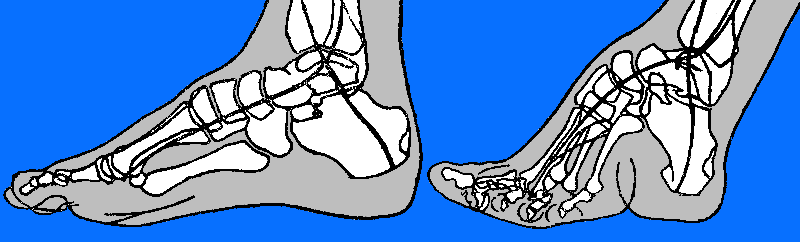
Title of this post refers to how difficult it is to change even "horrific" practices, for example, foot-binding, dueling, and slavery, as explained in The Honor Code by Kwame Anthony Appiah. This book review essay helped me understand a little better the complexity of Scott Simkins' question: "If evidence for changing pedagogies is so clear, then why do my colleagues keep teaching the same way?" See our FridayLive! online discussion homebase Webpage from Dec 9, 2011: tlt.gs/frlv120911
cross section of healthy foot and bound foot

Excerpts below are from "In the Eyes of Others" Book Review by Jonathan Haidt in the New York Times of The Honor Code - By Kwame Anthony Appiah, on October 24, 2010, on page BR22 of the Sunday Book Review.

"In 'The Honor Code,' we accompany Detective Appiah as he tries to figure out who killed three morally repugnant practices: dueling among British gentlemen, foot-binding among the Chinese elite and slavery in the British Empire. In each case he shows how notions of honor sustained the practice for centuries, and how (spoiler alert) it was honor that later killed the practice in just a few decades, making these cases the 'moral revolutions' referred to in his subtitle. Appiah also presents a fourth case: honor killings in present-day Pakistan, in which women and girls who are thought to have had sex outside of marriage, even in cases of rape, are murdered by male relatives to preserve the family's 'honor.' In this case the revolution has not yet happened, but Appiah draws on the other three cases to suggest how this horrific practice might someday meet its end.
"Take the practice of foot-binding. Nobody knows precisely why aristocratic Chinese parents began, more than 800 years ago, to change the shape of their daughters' feet. But once tiny, pointed feet became a difficult-to-attain ideal of feminine beauty, an obstacle to infidelity and a mark of elevated social status, there was no way for parents in the upper social strata to abandon the practice without losing honor — and reducing their daughters' marriage prospects. 


Whose Voices Don’t Matter? Feb 24, 2012 FridayLive! #TLTGFrLv


New Options, New Trade-Offs 
Voice, text, video, F2F, autodidactism


Voice  and alternatives - relative capabilities, usefulness, i.e.,  in courses, entertainment (live theater vs. TV)

PANEL:  Chuck Ansorge, Beth Dailey, Sally Kuhlenschmidt

This Home Base Web Page:   tlt.gs/voiceetal


Description, Resources, Attribution/Citations

Sunday, February 26, 2012

"Toys like spy glasses and laser tag sets...could actually perform serious surveillance"

"Toys like spy glasses and laser tag sets have been transformed... because of the addition of technology that records daytime and night vision video, the spy glasses ...could actually perform serious surveillance"

...“'We know that kids are going to play with technology, with iPhones and iPads and Android devices,' said Chuck Scothon, senior vice president for marketing for Mattel’s North America division. 'Our job is to not necessarily avoid that, but if you can’t fix it, feature it.'

"... More than a third of children 8 years old and younger use mobile devices like iPads or smartphones, a recent study from Common Sense Media found, and about a quarter of children ages 5 to 8 multitask with their digital devices most or some of the time.

"While toy makers have tried to modernize their products for years, this is the industry’s most aggressive integration of tech.

"... most toy makers had a disappointing 2011.

..."And the main item retailers could not seem to keep in stock last year was a tablet computer for children, the LeapFrog LeapPad Explorer.

"So Mattel’s new Barbie has a lens in her back; children point the doll at an image, and press a button on Barbie’s belt to take a photo. The image then appears on the front of Barbie’s T-shirt. The photos can also be downloaded to a computer.

"'The future of play is trending towards a seamless integration between a physical toy and digital add-ons,' said Laura Phillips, senior vice president for toys and seasonal merchandise at Walmart, in an e-mail. “This innovation is extremely important to keeping kids engaged and keeping toys more relevant.”

"Toys like spy glasses and laser tag sets have been transformed. Now, because of the addition of technology that records daytime and night vision video, the spy glasses made by Jakks Pacific, called Spy Net Multi Vision Goggles, could actually perform serious surveillance. And Hasbro’s Laser Tag of yore, when children ran around and pointed toy guns at one another, has been replaced by children pointing iPhones instead. Players place the iPhone in a gun, and the iPhone display — via an app — shows live video of whatever is ahead overlaid with graphics. When the trigger is pulled, lasers appear."

- Above excerpts from "Go Directly, Digitally to Jail? Classic Toys Learn New Clicks," By STEPHANIE CLIFFORD, Feb 25, 2012, New York Times Barbie, Monopoly and Hot Wheels for iPad Generation - NYTimes.com

http://www.nytimes.com/2012/02/26/business/barbie-monopoly-and-hot-wheels-for-ipad-generations.html?_r=1&sq=go%20digitally%20to%20jail&st=cse&scp=1&pagewanted=print


Thursday, February 23, 2012

We're overcommunicating and under-connecting according to inventor of e-mail!

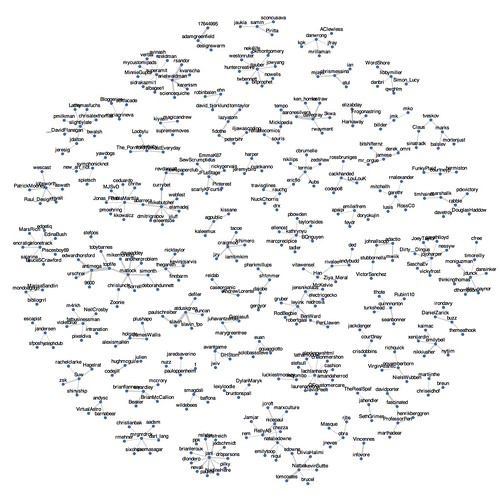
"Constellation of [Twitter] Communication"
How well/poorly can we use texting and other means of communication to connect with each other effectively as human beings?  Join us online  Friday, Feb 24 at 2PM ET when we'll consider the options and relative impact of voice, image, and text - both live and recorded - in “Whose Voices Don’t Matter?” Register free tlt.gs/frlv   
"Are we overcommunicating?
"I think people are overcommunicating in the sense they have missed out on what is communication," said Ayyadurai. "A lot of time when people are texting, it's not the content — you don't need to text — but people are doing it just to connect with another human being, so a lot of the information is almost irrelevant."
"I think we're in this phase now in humanity where we have all these communication vehicles but we still are, as humans, trying to figure out how do we connect," he continued, "because that ritual mode of communication is removed from us."
Above excerpts from "V.A. Shiva Ayyadurai: Inventor of e-mail honored by Smithsonian" Interview by Emi Kolawole in Washington Post Feb 17, 2012


Silent cinema (no voice! no text!) "gave an actor..super-expressive power..beyond words..no..analogue in language.”

Denby asserts that early in the 20th century, through silent cinema "The ineffable had been re-introduced into art."  See below for excerpts and link to full essay/review prompted by recent prominence of silent black-and-white film "The Artist" - nominated for 10 Oscars in 2012.
We'll consider the options and relative impact of voice, image, and text - both live and recorded - in “Whose Voices Don’t Matter?” online Friday, Feb 24 at 2PM ET.  Register free tlt.gs/frlv   

"Barthes was not given to extravagance, yet he was not exaggerating Garbo’s effect on the audience. "In 1923, ... Béla Balázs described the cinema as marking nothing less than the rebirth of the human in art. In literature, the body was confined to ordered pages of type. Now, in movies, the word became flesh. And Balázs explicitly praised silence as necessary for the highest achievement:
"'The gestures of visual man [i.e., the film actor] are not intended to convey concepts which can be expressed in words, but such inner experiences, such non-rational emotions which would still remain unexpressed when everything that can be told has been told.'
"A daunting remark. Is it true? There’s no doubt that film, by using methods special to itself—editing techniques such as cutting from one face in closeup to another and prolonging climactic moments—gave an actor a super-expressive power. It could turn him into a larger-than-life metaphor, a quintessence of a mental or spiritual state that, as Balázs says, lies beyond words, just as music lies beyond words. The stories of silent drama may often have been elemental, yet, within the broad outlines, the artists among the actors could bring out shadings that had no immediate analogue in language. The ineffable had been re-introduced into art."

- Above excerpts from an essay review "THE CRITICS; A CRITIC AT LARGE;  THE ARTISTS;  Notes on a lost style of acting.
" by David Denby, Feb 27, 2012, The New Yorker, p. 76
archives.newyorker.com/default.aspx?startpage=92&iid=59639 [NewYorker account login required to view the article that is reached by the preceding URL.]

Wednesday, February 22, 2012

Is text without audio better for teaching/learning? Is voice without text better for T/L? Why/when/how?

"Fractal...duality,... right and left brain perception..."
Please join us for “Whose Voices Don’t Matter?” a FREE online Friday, Feb 24 at 2PM ET,  when we'll explore the changing options and reasons for using voice in teaching and learning.  We'll also examine and discuss the title of this blog post - which is a purposely provocative False Dichotomy.  


Register Free: tlt.gs/frlv  

Meanwhile, here are some preliminary but useful email comments from Sally Kuhlenschmidt  re the role of audio in teaching/learning both online and face-to-face.

First, characteristics of text (without audio) that might be advantageous for teaching/learning:
  • Cross-Platform: "Endures across platforms, 
  • Editable: "Easily editable and thus improved and 
  • Clarifying: "Forces one (as author) to be explicit and clear in one’s thinking. "
SallyK  also says:  "I’m interested in knowing what audio provides that is equivalent or superior to those purposes?   I’ve dabbled with audio, made my own podcasts at one point, but find it useful in a fairly narrow set of circumstances. I’d be interested in hearing arguments in favor of it."

Second,  conditions for which audible voice might be advantageous for teaching/learning:
  • Emotion:  "Hearing a voice with emotional tones is appropriate for an emotional message (I use it in relaxation training) but may be a problem for an intellectual one. This particular message does have some emotional components but the intellectual is also there.
  • Categorization:  "Voice places a person in a particular gender and SES in more obvious ways than does text. That may be desirable for some purposes (e.g., a class on speaking) and less so for others. 
  • Multitasking:  "If a person is planning on doing two things at once (e.g., driving and listening) then audio is a help, however the research indicates that split attention is of poorer quality than focused attention so if the learning task is complex, better to focus on it alone. Multi-tasking turns out to be a poorer way to learn than focusing.  
  • Sensory Preferences:  "There is a subset of persons who have attentional or sensory issues who may be better served by audio. It could be a supplement to a text document if there are a number in the audience with those issues.   There will be others for whom audio is a problem. With text a screen reader can interpret the material."
[NOTE:  SallyK kindly allowed us to publish the excerpts above before there was a time and venue for the kind of reflection and editing characteristic of her valuable contributions.  I expect that readers will share my appreciation for these initial thoughts - as such - and join me in looking forward to a time when we can hear more from her on this topic.]

Thursday, February 16, 2012

"The lecture hall is under attack." But still respected & enhanced at annual Lilly Conferences on College Teaching

[We'll discuss a Lilly Conference hybrid session this Friday 2pm ET online   Feb 17, 2012
"Dissect & Improve Hybrid Workshop &Update on Ender’s Test of Artificial Instruction"
For more about Lilly Conferences, see tlt.gs/LillyDirs2012]  


"The anti-lecture movement is fueled, too, by the proliferation of online lectures, which threaten the monopoly on learning long held by bricks-and-mortar campuses.
..."active learning is hard work..."
- excerpts above from "Colleges looking beyond the lecture" By , Published: February 15 online  and February16 hard copy in The Washington Post


The highly-respected annual Lilly Conferences on College & University Teaching demonstrate quite effectively their longstanding commitment to active learning. Even in these conferences, what is the most prestigious invitation?  To be a plenary session speaker! And most Lilly plenary sessions are predominantly large group lectures (audience usually 200 to 700 in one large room).  


However, most Lilly plenaries include some interactivities - small group discussion within the audience and active dialogue between audience and presenter. Perhaps equally important and unusual is the expectation that invited speakers stay for the full 3 days of the conference and participate in sessions and informal conversations.  So the Lilly plenary "lectures" are extended and enhanced both within the plenary sessions and by encouraging related interactions.

"Everything must change so that nothing will change" unacknowledged impossible goal when tech, economy change fast

and “Necessity...mother of self-deception


Quote in title of this posting is from Cosi Fan Tutti: An Aurelio Zen Mystery, Michael Dibdin, Vintage (June 30, 1998) ISBN-10: 0679779116 ISBN-13: 978-0679779117, p. 133  

Wednesday, February 15, 2012

Tuesday, February 14, 2012